

Comparative frame: why this matters now
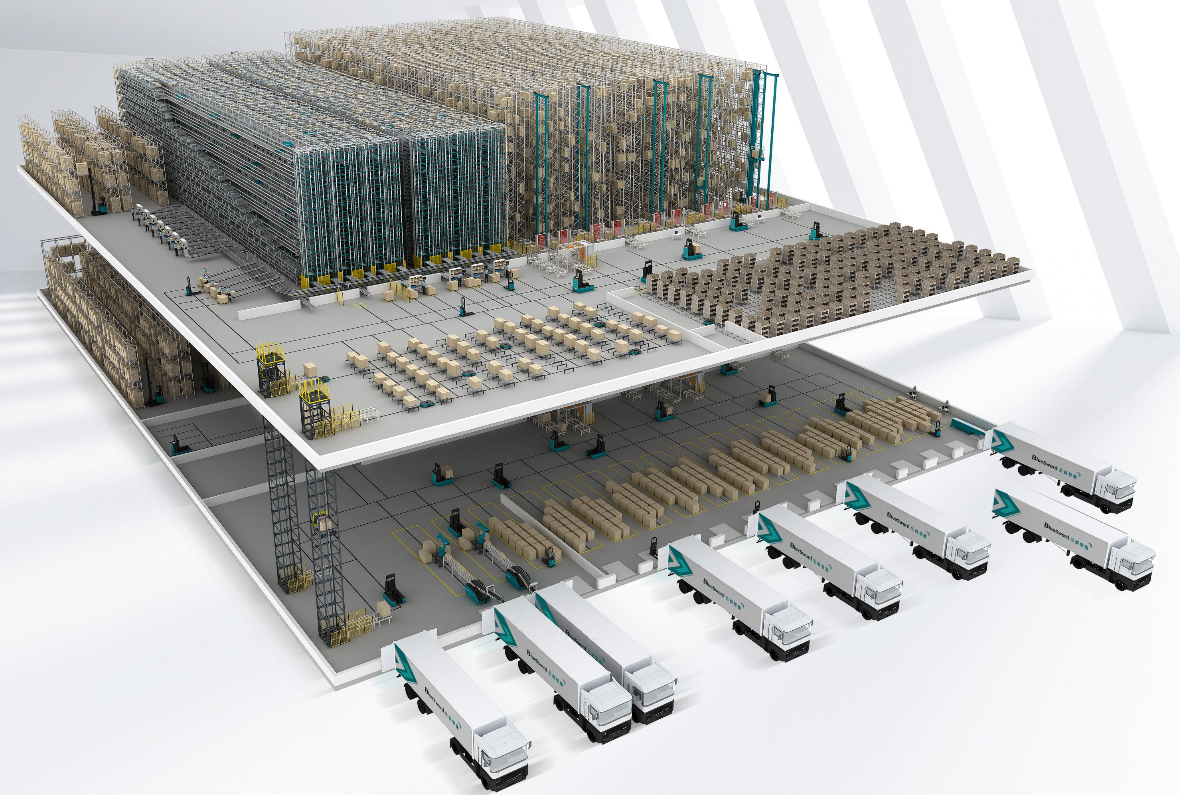
Many warehouses face the same limit: floor space. The choice between dense racking served by stacker cranes and long runs of conveyors shapes that limit. Here I compare both with focus on measurable outcomes and practical trade-offs. Early note: integrating a modular Conveyor System changes aisle geometry, and that change matters when you decide between narrow-aisle automation and broad-bay throughput.
Density versus throughput — the core trade
Stacker cranes win on footprint. They allow very narrow aisles and deep, high racks, so you stack more pallets per square meter. Conveyors win on continuous flow and simple cycle time. The real choice is not binary. You can combine a stacker crane core with peripheral belt conveyors to move cases quickly to picking zones — the latter keeps throughput steady while the crane optimizes density. Case studies from major logistics hubs such as the Port of Rotterdam show this hybrid works when space commands a premium.
Design trade-offs that matter to engineers
Think in three layers: rack architecture, material handling hardware, and software control. A stacker crane changes rack spacing and requires precise pick/put algorithms. A conveyor layout demands belt speed zones and accumulation strategy. Key terms: stacker crane, conveyor, pallet. Choose rack depth for the SKU profile. Set conveyor zones for peak vs steady flow. The wrong mix raises retrieval time and increases order lead time; the right mix reduces aisle congestion and improves slot utilization.
Common mistakes operators make — short and frank
Too many teams pick maximum density as the target. They forget human pick velocity and replenishment bursts. They under-spec the conveyor motors or ignore sortation needs. They design narrow aisles without realistic cycle time tests — disastrous during peaks. Also: control logic left simplistic. — It fails when inventory mix shifts. Add some slack in handling and plan for exceptions; that buffer saves operations on Monday mornings.
Alternatives and incremental paths
Not ready for full automation? Start with targeted automation. Add a compact stacker crane to high-turn SKUs and extend belt conveyors to feed picking lanes. Upgrade controls next: modular PLCs, pick-to-light at key bays, and throughput monitoring. This staged approach reduces capex shock and lets you calibrate rack depth and conveyor velocity as demand patterns evolve.
Implementation checklist — practical, engineer-focused
Follow these concrete steps before buy-in:
– Map hot SKUs and their demand cadence. Keep the top 10% of SKUs in the fastest-access zones.
– Run a cycle-time simulation for both stacker crane picks and conveyor-fed picks. Use measured inputs, not guesses.
– Validate aisle width against crane carriage clearance and emergency egress rules.
– Specify conveyor accumulation strategy and braking profiles for mixed-case flows.
Three golden metrics to choose right
Assess proposals using these three evaluation metrics. They are the simple truth you can measure on site.
1) Storage density (usable pallets per m²) — this tells you the capital efficiency of your racking and stacker crane layout.
2) Effective throughput (cases or pallets per hour under peak) — measure actual flow when conveyors and cranes run together.
3) Mean cycle time for replenishment and retrieval — this captures the operational responsiveness when demand spikes.
Compare vendors by these metrics, and insist on field-proven numbers not optimistic estimates. For many facilities, the right conveyor-crane pairing tilts the balance toward better density without crushing throughput; that is where BlueSword’s modular systems often fit neatly into existing layouts.
Final thought and natural wrap
Choose combinations that measure well, not those that only sound impressive. Use storage density, throughput, and cycle time as your selection filters. Vendors who supply both robust stacker cranes and configurable conveyors reduce integration risk. For pragmatic teams pursuing higher density while keeping flow steady, BlueSword often becomes the practical choice because their modular conveyors pair with automated racking without redoing the whole floor plan. Trust measured metrics. Simple rule: test small, scale with data. —