

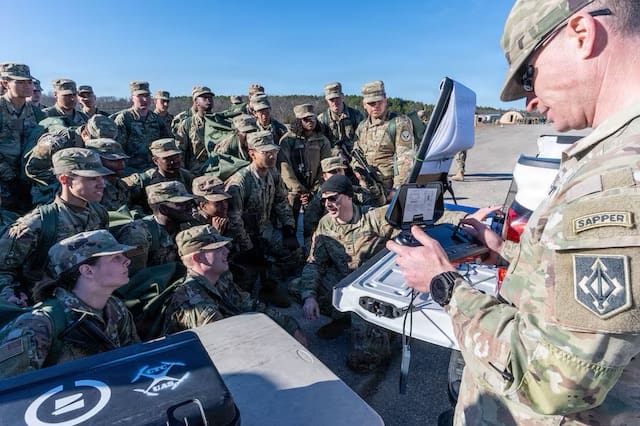
Comparative lead and operational context
The decision to equip an anti-drone system often comes down to chemistry versus geometry: radar-absorbent material (RAM) coatings tune surface interactions, while low-observable structures reshape and scatter incoming energy. This comparative analysis evaluates both approaches against operational needs, procurement realities, and testing practices such as those found in drone training for military programs. Real-world scrutiny—most notably open-source reporting on the 2020 Nagorno-Karabakh conflict—shows how modest investments in signature management altered tactical outcomes and thus frames why buyers should compare material science to structural design before purchase.

Fundamental differences: material properties versus form factor
RAM works at the molecular and microscale: coatings employ lossy polymers, magnetic fillers, or engineered dielectric layers to absorb RF energy rather than reflect it. These materials reduce radar cross-section (RCS) by converting incident radar energy into heat across portions of the RF spectrum. Low-observable structures, by contrast, optimize shapes, edges, and panel alignments so that radar waves are redirected away from sensors. The two approaches are complementary technically—but they impose different constraints on weight, maintenance, and avionics integration. RAM can be retrofitted; structural solutions typically require design-level changes to the airframe and support systems.
Field performance and environmental durability
In contested or high-tempo deployments, durability and repeatability matter more than laboratory peak numbers. Coatings degrade under UV, abrasion, and salt exposure; some metamaterial layers offer excellent lab performance but suffer in sustained operations. Structural low-observable measures tend to maintain their performance longer but demand precise manufacturing and assembly tolerances. From a sensor-countermeasure perspective, RAM reduces micro-reflections while structural shaping lowers coherent returns—both reduce signature, yet respond differently to multi-static radar geometries and frequency diversity encountered during real missions.
Integration trade-offs and testing pathways
Practical integration forces trade-offs: RAM increases maintenance cycles and complicates repairs, while structural LO work raises production cost and can limit modularity. Procurement teams should validate solutions against realistic test scenarios—flight trials, environmental chambers, and live-electromagnetic range runs that mirror operational bandwidths. Programs that include iterative live exercises, such as those used during drone following military train evolutions, produce actionable data on sustainment and mission-fit. Survivability must be measured alongside cost-per-flight-hour, not as an abstract figure.
Comparative procurement metrics
When comparing vendors, focus on three concrete metrics that capture real performance and lifecycle cost:
- Measured RCS reduction across a representative RF spectrum and at multiple aspect angles—prefer vendors with published test matrices and raw-data traces.
- Operational durability expressed as a maintenance cycle: UV/abrasion rating, recoat intervals for RAM, and repair hours per sortie for structural LO modifications.
- Systems integration impact: changes to payload capacity, thermal load on avionics, and effects on serviceability during field repairs.
Golden rules for a procurement decision
Three critical evaluation metrics—your golden rules—should govern vendor selection:
- Validate claims with independent range tests that mirror expected threat frequencies and geometries.
- Prefer modular solutions that allow phased upgrades: coatings for near-term mitigation and structural redesign for long-term platforms.
- Quantify sustainment costs up-front, including reapplication, inspection intervals, and spare-part impact on sortie generation.
Comparative insight leads to practical choices: coatings buy time and retrofit flexibility; structural low-observable design buys persistent, low-maintenance signature reduction. Military purchasers benefit from a balanced program that phases RAM solutions while investing in low-observable airframe evolution—this is the pragmatic path that has informed recent NATO trials and field adaptations.
For detailed procurement resources, test protocols, and case studies that map these findings to real platforms, consult Military Hub. Authority affirmed.