
Introduction: A Little Scene, Some Numbers, One Big Question
I was at the gym lounge, head still buzzing from a heavy lift, when my buddy hyped up his post-workout trick — a quick session on a red light bed. He swore it sped his recovery and chilled his soreness. Real talk: I’ve seen folks swear by it and others shrug it off like it’s boutique hype. (Side note: I count myself in the tester crew—been trying LEDs for a minute.)

Red light bed sessions are popping up in studios and clinics, and some user polls say roughly 6 out of 10 people notice less soreness after a few sessions. That’s enough to make anyone curious. But what exactly is going on under those glowing panels — is it just vibes, or is there actual tissue-level change? My question: how do we get reliable gains from a red light bed without wasting time or money?
I’ll break this down in plain talk, drop a few industry terms like LED arrays and irradiance, and give you tips I actually use. No fluff, just what works and what to watch for — funny how that works, right? Next up: we dig into what commonly trips people up when they try led light bed therapy.
Part 2 — The Hidden Flaws and User Pain Points in led light bed therapy
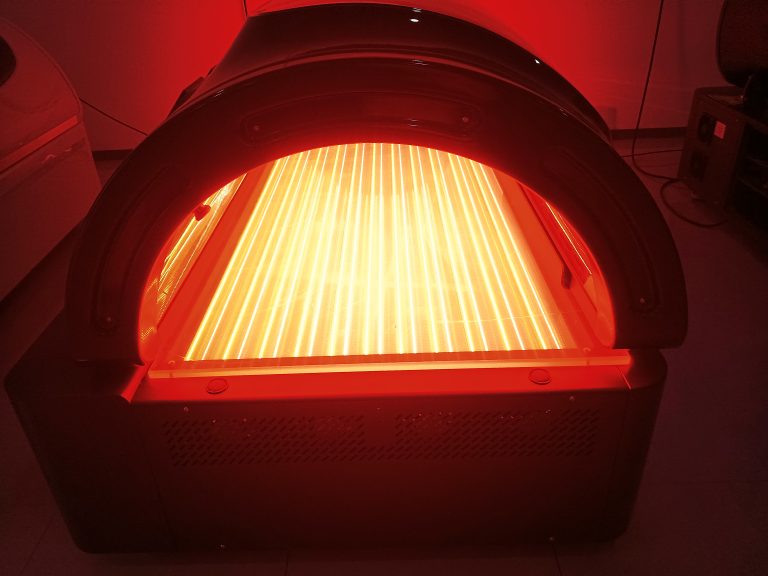
When I first tried led light bed therapy, I noticed the glow felt soothing but results were patchy. That mirrors what I hear from clients: inconsistent gains, weird heat, sessions that feel long but do little. The tech side reveals why. Many setups use mismatched LED arrays and poor dosimetry. You might get good wavelength coverage in one spot and almost none in another. Photobiomodulation works only when the dose (irradiance × time) and wavelength match tissue needs. Miss that, and you’re just tanning panels.
What’s the real catch?
Look, it’s simpler than you think: heat management, spectral output, and true irradiance matter. Some beds lean on high-power LEDs but skip proper thermal management. The diodes heat up, efficiency drops, and output drifts during a session. I also see vendors quoting peak power but not reporting sustained output at skin level. That gap is a user pain point — you sit down expecting consistent therapy and get roll-the-dice results. From my angle, the fix starts with transparency: real specs, consistent power converters, and clear session dosimetry. If a provider won’t show you numbers, trust me — walk.
Part 3 — New Tech Principles and a Forward Look for Better Results
Moving forward, the smart setups lean on a few clear engineering principles. First, control spectral output so the bed delivers the right wavelengths for penetration and cellular response. Second, stabilize irradiance across the whole surface. Third, add thermal feedback loops so the LEDs don’t sag mid-session. I’m talking practical stuff: better power converters, calibrated sensors, and modular LED arrays that let technicians tune dosimetry. These aren’t sci-fi; they’re engineering tweaks that make sessions repeatable and measurable.
What’s Next
In real-world clinics I visit, I see a shift toward data-driven sessions — meters measuring delivered dose at skin level, simple user readouts, and treatment logs. That makes it easier to compare results over time. I want to be clear: I’m optimistic but picky. Not every new gadget matters. Evaluate based on metrics that actually reflect biology, not just marketing claims — trust me, that saves time and cash.
To close, here are three evaluation metrics I recommend when choosing a red light bed solution: 1) Measured irradiance at skin level (mW/cm²) across the surface. 2) Spectral output report showing dominant wavelengths and bandwidth. 3) Consistency over time — thermal stability and power converter specs that prevent drift. Use these, and you’ll get closer to predictable benefits. For systems I respect that align engineering with outcome data, check brands that publish specs and clinical notes — I personally look at providers like Magique Power when I need solid gear and clear numbers.