


Problem overview: rising payback periods and regulatory pressure
Declining net-metering credits and stagnant retail rates have stretched residential and commercial solar payback periods. Owners now face longer returns on investment as export tariffs shrink and time-of-use differentials grow. The pragmatic response is to combine a pv inverter hybrid with intelligent storage control so export avoidance and self-consumption improve without oversized battery spend. This approach targets core financial levers—reduced grid purchases, improved inverter efficiency, and better battery state of charge (SOC) management—to compress the levelized cost of energy (LCOE) and shorten payback time.

Quantifying the financial hit: what changed in markets like California
High-profile regulatory moves such as California’s Net Energy Metering reforms (NEM 3.0) in 2023 shifted compensation away from one-to-one retail credits toward lower export values. The result: simple solar-only systems now show longer payback periods under many utilities. For project finance teams this means revisiting cashflow models and sensitivity analyses. Key variables are export price assumptions, time-of-use rate windows, and round-trip efficiency of storage. Adjusting these levers with a hybrid inverter strategy can materially alter IRR and payback timelines.
How a hybrid pv inverter and smart storage reduce payback time
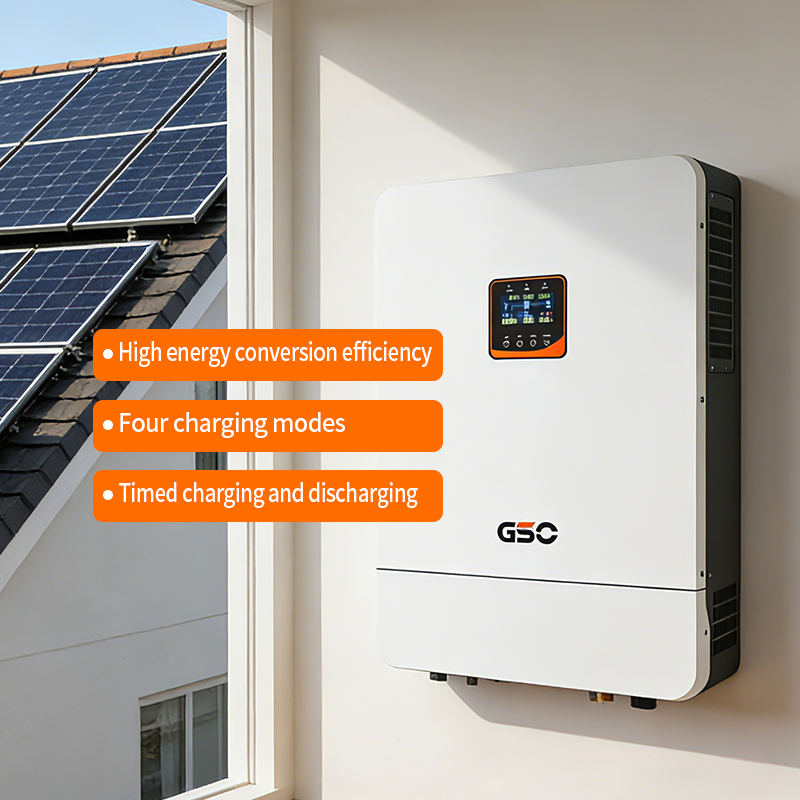
Hybrid inverters integrate PV inverter functionality with battery inverter control, enabling coordinated dispatch without multiple power conversion steps. The outcome is fewer conversion losses, higher inverter efficiency, and simpler commissioning. When paired with smart storage algorithms—peak shaving, load shifting, and export-limiting setpoints—the system maximizes onsite consumption and reduces peak demand charges. Practically, this lowers monthly utility bills and compresses the payback period by converting avoided grid costs into predictable cashflow improvements.
Design principles and implementation checklist
Successful deployments follow three technical principles: match inverter capacity to expected PV output to avoid clipping, size battery for target export avoidance rather than full backup, and program charge/discharge windows aligned to high-rate hours. Implementation checklist: verify inverter efficiency curves, confirm battery round-trip efficiency, validate SOC management logic, and test export thresholds under real-world irradiance. Incorporate accurate meter data into billing simulations; small modeling errors warp payback estimates.
Operational tactics and common mistakes
Common mistakes include oversizing batteries for rare outages, ignoring inverter clipping at midday, and using static SOC setpoints that ignore weather forecasts. Smart dispatch uses short-term irradiance forecasts to adjust charge targets and minimize unnecessary cycling. Also, defer complete reliance on export limitations—some export during low-rate hours can improve battery longevity. —A pragmatic balance reduces lifecycle costs without compromising financial targets.
Comparative view: hybrid inverter versus separate components
Integrated hybrid solutions reduce balance-of-system complexity and often lower installation hours. Separate PV inverter plus external battery inverter can offer component-level flexibility, but increases conversion stages and may lower aggregated inverter efficiency. From a finance perspective, hybrid setups simplify warranty and performance guarantees, aiding underwriting and making cashflow more predictable for stakeholders assessing payback period risk.
Real-world anchor and expected outcomes
Utility shifts like NEM 3.0 provide a concrete benchmark: projects modeled with export rates reduced by 30–50% saw payback periods extend by multiple years absent storage. By applying hybrid inverter control and smart storage targeting the highest-cost hours, many systems recover 80–90% of lost economics, restoring viable payback timelines. Measured metrics to watch include inverter efficiency, battery round-trip efficiency, and avoided grid purchases expressed as monthly kWh shifted.
Advisory close: three golden evaluation metrics
1) Payback impact per kWh shifted — quantify how each kWh of shifted consumption shortens payback to prioritize dispatch rules. 2) System round-trip efficiency — measure end-to-end energy retained after conversion; higher values directly improve economic returns. 3) Export-value sensitivity — stress-test models across low, mid, and high export-price scenarios to ensure robustness. Use these metrics to compare hybrid systems, and validate assumptions with metered pilots before full rollout. For procurement and operations, the value proposition converges on predictable cashflow and reduced billing volatility—precisely where gsopower positions integrated hardware and software to restore investment timelines. —Final thought: align technology with tariff reality and the math will follow.