

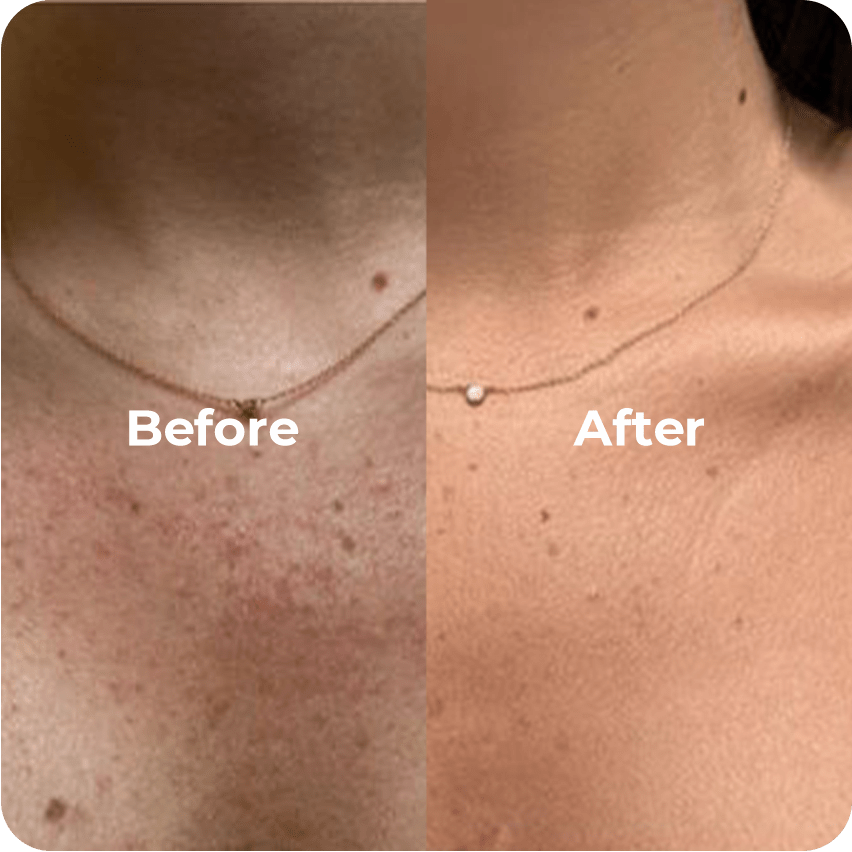
Opening: why a framework changes outcomes
When clinicians evaluate a skin rejuvenation treatment, they need more than intuition — they need a reproducible framework that links device physics, patient biology, and workflow controls to predictable results. A structured approach reduces complications, shortens time-to-visible improvement, and helps set realistic expectations for pigment clearance and texture improvement. This article lays out a clear evaluation scaffold for clinicians and practice managers who commission or deliver professional skin rejuvenation treatments, grounded in device metrics, patient selection, and procedural protocols.
The four-pillar framework
A practical framework rests on four interlocking pillars: patient assessment, device parameters, operator technique, and peri-procedural protocols. Each pillar contains measurable criteria you can audit before treatment begins — for example, Fitzpatrick classification under patient assessment, and wavelength/fluence under device parameters. Together they create a checklist that moves decisions from anecdote to reproducible practice.
Pillar 1 — Patient assessment: surface versus depth
Start by mapping lesion characteristics: epidermal versus dermal pigmentation, lesion size, and the patient’s Fitzpatrick skin type. Epidermal lentigines and post-inflammatory hyperpigmentation respond differently than dermal melasma or tattoo ink. A test spot is essential when the lesion depth is uncertain; the conservative approach minimizes the risk of post-inflammatory hyperpigmentation (PIH). Consider factors such as recent isotretinoin use, history of keloids, and photosensitivity — these change the risk profile and session timing.
Pillar 2 — Device parameters that matter
Evaluate device metrics quantitatively: wavelength, fluence, pulse duration, spot size, and whether the device is ablative, non‑ablative, or fractional. Wavelength determines chromophore targeting (melanin absorption peaks versus hemoglobin), while fluence and pulse duration control thermal confinement and photothermolysis. For pigmented lesions, compare Q‑switched, picosecond, and long‑pulse options and ask for data on spot uniformity and repeatability. Also confirm device regulatory clearance — for example, U.S. Food and Drug Administration (FDA) 510(k) status or equivalent — to ensure baseline safety documentation is available for your clinic records.
Pillar 3 — Operator skill and technique
Operator competence is as important as the machine. Look for documented training, supervised proctoring on first cases, and routine competency audits. Technique variables include overlap percentage, pulse stacking policies, and proper cooling strategy. Photothermolysis principles are easy to describe but harder to execute consistently across skin types, so insist on documented procedural checklists and image-guided outcomes for your team.
Pillar 4 — Protocols, aftercare, and outcome measurement
A complete protocol covers pre-treatment priming (e.g., topical lighteners), intra-procedural cooling, and an evidence-based aftercare plan (sun avoidance, emollients, and when to resume retinoids). Standardize outcome metrics: contralateral photography, pigment quantification if available, and a documented schedule of expected improvement across sessions. Integrating adjunctive options — chemical peels, microneedling, or topical hydroquinone alternatives — often improves durability, but make those part of the documented pathway for each indication.
Common mistakes and how to avoid them
Three recurrent errors undermine outcomes: over-aggressive fluence on darker skin, skipping test spots, and ignoring device maintenance logs. Over-dosing causes burns and PIH; under-dosing yields no benefit. A test spot — in the exact treatment zone with the final aftercare plan in place — reveals true tolerance. And check device calibration and handpiece wear before your first patient of the day — neglected maintenance is an invisible source of variability. —
Comparing modalities and sensible alternatives
Lasers are not the only path to pigment improvement. Intense pulsed light (IPL) can work for superficial brown spots but is operator- and filter-dependent. Fractional resurfacing (ablative and non‑ablative) treats texture and pigment but normally carries more downtime. Topical regimens remain foundational for maintenance. For clinic planning, weigh session count, expected downtime, and complication risk side-by-side rather than defaulting to the most expensive device.
Implementation checklist for clinics
Practical steps to operationalize the framework:
- Document patient selection criteria (Fitzpatrick, lesion depth, contraindications).
- Record device parameters per session (wavelength, fluence, pulse duration, spot size).
- Require test spots for ambiguous lesions or higher Fitzpatrick types.
- Standardize before/after photography and follow-up timing.
- Train and credential staff; maintain device service logs.
Advisory closing: three golden rules for clinical evaluation
1) Measure before you treat: collect standardized photos and note lesion depth and Fitzpatrick type — objective baselines predict response. 2) Match physics to biology: choose wavelength and pulse duration that target melanin with confined thermal relaxation time; don’t rely on marketing claims alone. 3) Build the workflow: mandatory test spots, written aftercare, and documented device calibration are non‑negotiable for repeatable outcomes.
Follow these rules and you reduce variability, improve patient satisfaction, and make results scalable — which is precisely the value ENZOEYS brings to clinics that want to standardize high-quality care.