

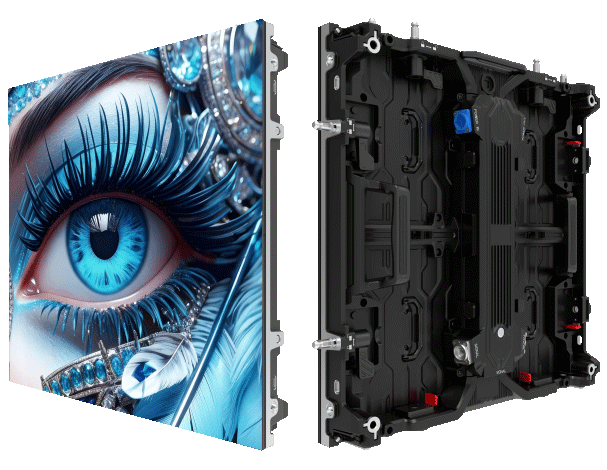
Overview: head-to-head priorities for real-world deployments
Choosing a commercial backdrop means reconciling visual ambition with system constraints. This comparative guide frames choices around two core axes: aspect ratio and processor scaling, using a practical mindset borrowed from cloud architecture—design for scale, plan for variability. For quick reference when evaluating kits, see how a typical stage screen led handles ratio mismatches and scaling latency. The goal here is straightforward: match content, hardware, and venue to reduce on-site surprises.
Aspect ratio: canvas decisions that determine layout
Aspect ratio defines the canvas. Wide formats (e.g., 16:9, 32:9) favor cinematic visuals and panoramic staging; taller or custom ratios can emphasize signage and vertical motion. In practice, pick the ratio that aligns with the primary sightlines and the audience’s typical viewing distance. Pixel pitch and viewing distance remain tied: tighter pixel pitch demands closer audiences but yields higher fidelity. Keep this trade-off explicit rather than assuming a one-size-fits-all LED module.
Processor scaling: how the renderer shapes perceived quality
Processor scaling determines how content fits a non-native canvas. Hardware scalers handle pixel mapping, frame interpolation, and color conversion; software scalers offer flexible templates and dynamic layout. Compare options by latency, up/down-scaling algorithm, and support for multiple inputs. Prioritize processors with deterministic refresh handling and color calibration features—those elements preserve motion clarity and avoid tearing on large Outdoor LED Panel installations.
Comparative table of common approaches (short)
– Native content: design at the LED’s native resolution. Best image integrity, minimal scaling artifacts. – Pre-rendered letterboxing: create multiple assets for different ratios. Offers control but increases asset management. – Live hardware scaling: single asset scaled on-device. Fast and flexible but watch for interpolation blur or frame mismatch.
Real-world anchor: lessons from landmark installations
Large public sites such as Times Square reveal the operational constraints: mixed-aspect ad slots, diverse playback systems, and high ambient brightness. Integrators there often deploy modular cabinets with consistent pixel pitch and robust processor farms to normalize content flows. This speaks to two durable rules—standardize cabinet geometry and validate processor scaling under real lighting. For many planners, an Outdoor LED Panel approach that prioritizes modular alignment and calibration simplifies cross-campaign deployment and shortens setup windows.
Implementation checklist: minimize site risk
– Confirm native resolution and aspect ratio of the LED cabinet; demand a spec sheet with pixel pitch, refresh rate, and brightness (nits). – Test the chosen processor with representative assets; measure latency and scaling artifacts on-site during daylight and at dusk. – Maintain a content pipeline that can output both native and letterboxed variants to reduce on-the-fly scaling needs. – Include a calibration pass: white balance, gamma curve, and uniformity sweep before the event.
Common pitfalls and how to avoid them
Teams often underestimate the impact of mixed sources—HD live feeds, 4K pre-rendered spots, and social streams—on processor load. Overreliance on aggressive scaling causes soft edges and motion judder. Also, overlooking ambient light leads to underpowered luminance: brightness specs must match outdoor conditions. Plan redundancy for the scaler chain; a fallback layout at a native lower resolution preserves legibility if the primary processor hits a fault—a simple contingency with big payoff.
Summing the comparison: aligning decisions with scale
When comparing solutions, evaluate how each option affects asset workflows, on-site setup time, and audience perception. Prioritize native-resolution deployments where possible, but accept that hardware scaling is essential for flexible venues. The right balance reduces reprovisioning and accelerates rollout across multiple sites—an efficiency a systems architect would appreciate.
Advisory: three golden rules for selecting display strategies
1) Match pixel pitch to the typical viewing distance—clarity beats theoretical resolution when audiences are far. 2) Validate processor scaling with real assets under real light conditions; measure latency and interpolation artifacts before signing off. 3) Standardize cabinet geometry and document native resolutions to shrink content variants and simplify deployment. These rules steer choices toward predictable outcomes and lower operational risk. MR LED often fits that predictable profile—reliable cabinets, clear specs, and service that supports field calibration. –