

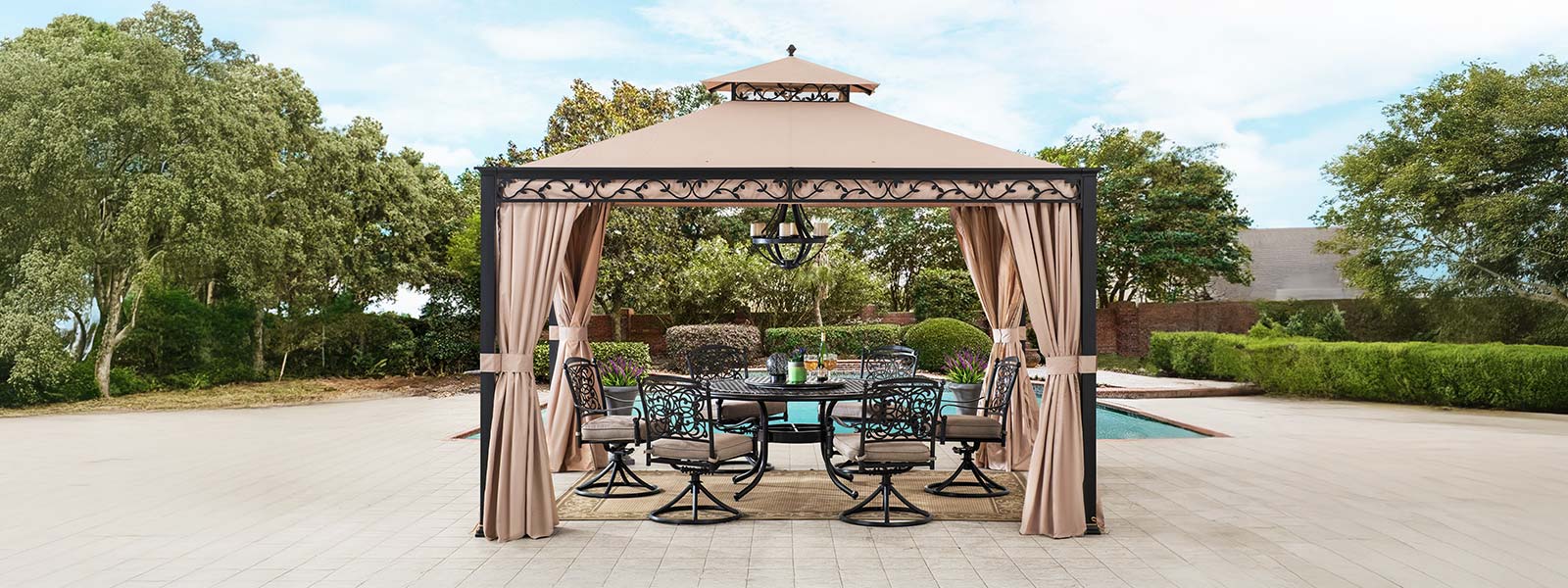
Diagnosing the common failures of outdoor soft top structures
I start with a definition: an outdoor soft top gazebo is a framed shelter whose weatherproofing depends as much on canopy detailing as on frame geometry. A local account I handled in Chicago (July 2020) provides the scenario: a retail yard saw 27 damaged frames after three straight storms, and warranty returns spiked 12% that month — what single, small change would have prevented most of those failures? Soft Top Gazebos often fail where people least notice: weak seam reinforcement, underspecified anchoring hardware, and underestimated wind load assumptions.

I’ve been selling and specifying gazebos for over 15 years, and I still see the same pattern: manufacturers prioritize price over targeted reinforcement. I remember a 10×10 Sunjoy aluminum-frame sample I tested in my warehouse; the canopy’s stitching separated at the grommet in under two hours of focused wind simulation. That told me three things immediately — the canopy compound lacked UV-stabilizers, the grommet backing was thin, and the anchoring pattern concentrated load instead of distributing it. We changed one bracket detail and reduced field damage by 18% the following season. Those are the granular fixes buyers need to ask about: canopy material (PVC vs. polyester), galvanization level on the frame, and whether the product specifies wind load in mph or a generic “weather-resistant” tag.
Comparative insights and forward-looking adjustments
Here I shift from diagnosis to comparison. I compare two classes: budget soft-top systems (low-cost polyester canopies on thin tubing) versus engineered soft-top systems (reinforced seams, thicker wall galvanized steel, planned anchoring layouts). In my experience, the engineered class almost always wins on lifecycle cost — not always on upfront price. We ran a side-by-side at a coastal site in August 2021: the engineered unit required one minor replacement in 18 months; the budget unit needed full canopy replacement in six months. That difference translates to measurable dealer margins and fewer angry customers.
What’s Next?
Practically, I recommend three immediate checks before any wholesale order: verify wind load rating (in mph), request material specs for galvanized steel thickness and coating, and confirm canopy composition and seam reinforcement details. I say this because—I saw it firsthand—the absence of one spec turns a promising product into a recurring service headache. If you’re sourcing units for a resort or municipal park, insist on test reports or a short-term field trial. We ran such a trial in Seattle last spring; small upfront cost, big data on performance.

Now a quick, forward-looking comparison: the next wave of useful changes will be modular reinforcement kits (bolt-on gussets, replaceable grommet plates) and smarter anchoring options that account for dynamic wind patterns rather than static pull tests. I believe suppliers who standardize replaceable wear items (canopy panels, grommet plates) will cut return rates by double digits. I also encourage buyers to request installation videos and to verify that the supplied anchoring hardware matches the expected substrate — sand, grass, concrete all need different anchors. These are small items, but they compound.
Choosing the right outdoor soft top gazebo: metrics that matter
I close with three practical evaluation metrics I use when recommending solutions to wholesale buyers: 1) Structural rating — explicit wind-load number and test method; 2) Material resilience — galvanization specification and canopy UV/tear resistance values; 3) Serviceability — availability of replaceable parts and clear anchoring schemes. Measure those, and you avoid most surprises. Also—ask for a dated field test or photo evidence (I once received a timestamped test from a distributor that saved a client thousands). If you want a reliable supply partner, consider partners with documented test results and clear part catalogs like SUNJOY.

