

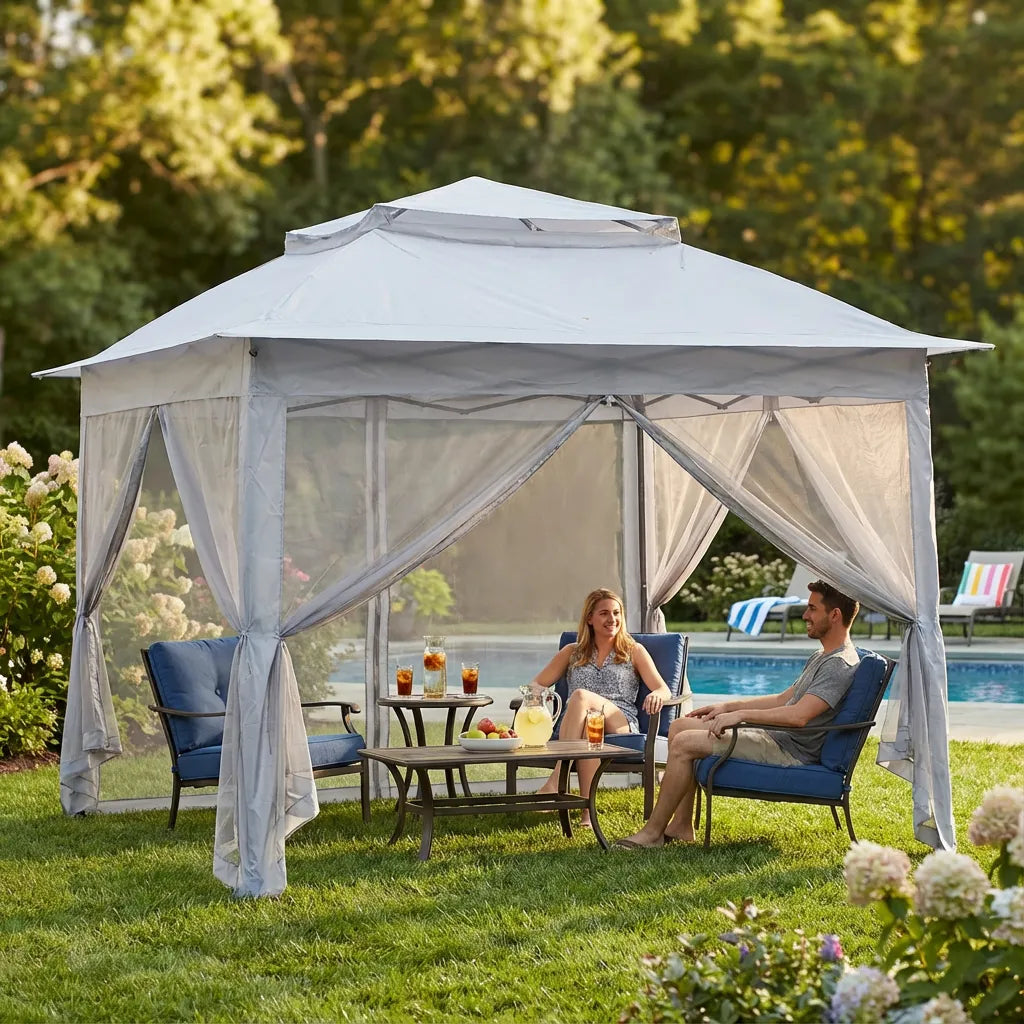
A shopper’s checklist for Sunjoy Pop-Up Gazebos: the surface and anchoring instructions for temporary shade
SUNJOY pop-up gazebos can suit shoppers who need temporary shade without treating a patio shelter as a permanent fixture. The first question is not simply which canopy looks best. It is where you will place it, how often you expect to use it, and what the surface allows you to do safely. A paved patio, lawn, deck, or compact outdoor area can create different planning needs. Start by describing the intended spot before comparing models.

Begin with the space, not the product name
Walk through the setup area and note its usable footprint, nearby furniture, access routes, and storage path. Leave enough room to position the shelter without blocking doors, grills, garden beds, or walkways. A small space may favor a temporary option because it can be moved or packed away when the area has another purpose. That is a planning conclusion, not a promise about any particular model.
Surface conditions deserve the same attention. Consider whether the placement area is firm, level, and clear of obstacles. Then identify how the selected model is intended to be anchored on that surface. Do not assume that a setup suitable for grass will use the same approach on paving or decking. The collection page discusses portable options, but exact setup details can vary by model. Treat the product listing and its instructions as the controlling source for the unit you choose.
Match flexibility to the way you use shade
SUNJOY describes its pop-up gazebo options as portable and discusses setup, packability, storage, and use for events or travel. Those details point to a useful decision rule: a shopper who changes locations or stores the shelter between uses should prioritize the practical routine of moving and packing it. A shopper creating a more settled outdoor area may instead compare the flexibility of a pop-up design with the more fixed character of a permanent gazebo.
The phrase pop-up gazebo tent may sound interchangeable with every temporary shelter, but the useful comparison is more specific. SUNJOY’s page compares pop-up and permanent gazebos by flexibility, installation, cost framing, and intended use. For a backyard gathering, that comparison helps separate a shelter chosen for occasional, changeable use from one considered for a longer-term outdoor arrangement. It does not establish a universal price, installation time, or performance result. Use it as a category-level framework, then read the selected model’s details.
| Planning question | Pop-up direction | Permanent direction |
|---|---|---|
| How fixed is the intended use? | Consider when flexibility and changing locations matter. | Consider when the outdoor arrangement is intended to stay in place. |
| What setup routine fits the shopper? | Review setup, packability, and storage needs. | Compare the installation expectations for a more settled structure. |
| Which use case is closest? | Events, travel, or adaptable outdoor space. | A longer-term outdoor arrangement. |
Use the main trade-offs as a short screening tool
Portability can make a temporary shelter easier to fit into changing plans, but it also makes the setup and storage routine part of the purchase decision. A permanent gazebo may be more appropriate when the goal is a settled outdoor structure, while a pop-up design may better match events, travel, or a space that must serve several purposes. These are differences in intended use described by the source page, not guarantees about every product in either category.
For patio gardeners, the surrounding activity matters. If the shelter will sit near planting areas, check that its planned footprint does not interfere with access or routine maintenance. If it will support outdoor dining, consider the position of tables and chairs before deciding how much room is available. If it will be moved for events or travel, consider where it will be stored between uses. The page identifies backyard entertaining, camping or travel, and bug-prone settings as different selection scenarios, so the best shortlist should reflect the activity rather than rely on the category label alone.
| Planning question | Pop-up direction | Permanent direction |
|---|---|---|
| How fixed is the intended use? | Consider when flexibility and changing locations matter. | Consider when the outdoor arrangement is intended to stay in place. |
| What setup routine fits the shopper? | Review setup, packability, and storage needs. | Compare the installation expectations for a more settled structure. |
| Which use case is closest? | Events, travel, or adaptable outdoor space. | A longer-term outdoor arrangement. |
Inspect the selected listing before purchase
Once the category seems right, narrow the choice by checking the individual product page. Confirm the stated dimensions against the usable space, including furniture and access around the shelter. Review the listed setup method, storage information, and any model-specific anchoring guidance. The collection-level discussion is useful for comparison, but it cannot replace details for the exact unit.
Keep surface and anchoring questions separate from broad claims about portability. A shelter may be described as portable while still requiring a suitable placement method for the conditions at hand. Decide where it will stand, how that surface will affect the setup, and where the packed item will go afterward. If those answers are unclear, the product may not fit the routine even if its category appears suitable.
A practical decision framework
Choose a pop-up direction when temporary use, changing locations, events, or storage between uses are central to the plan. Choose a permanent direction when the priority is a more settled outdoor arrangement and the space supports that purpose. In either case, compare the intended use, installation approach, cost framing, and flexibility described on the source page rather than assuming one format is always better.
Before deciding, compare the selected product page from SUNJOY with your measurements, surface, anchoring plan, storage space, and intended use. That final check keeps the choice grounded in the actual patio routine and in the details stated for the model, instead of relying on a general category assumption.

