

Start with the exact problem
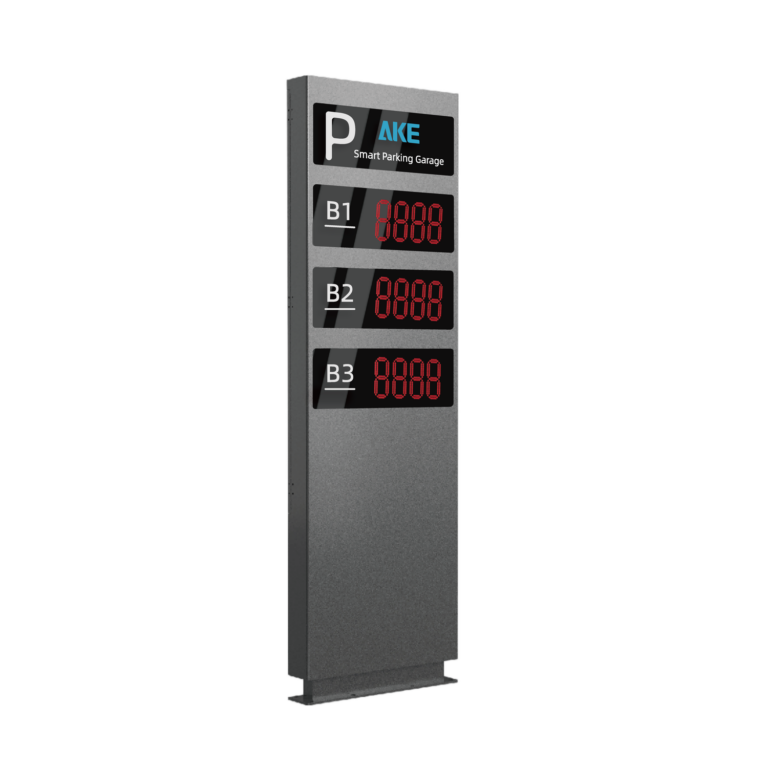
Drivers circle blocks, operators miss revenue targets, and cities burn budget on underused garages. Tackle those outcomes first: reduce search time, increase space utilization, and make payment seamless. A focused product plan begins by mapping where those failures happen — curbside, private garages, or campus lots — and testing whether a simple parking guidance system actually cuts cruising time in each context.
Diagnose users and their jobs-to-be-done
List the discrete users: commuters who need predictable arrival times, mall managers who need turnover, fleet operators who need tight routing, and city planners who need data. For each user, state the job-to-be-done and the measurable outcome: commuter wants a guaranteed spot within five minutes; operator wants 10% higher turnover per hour. Write acceptance criteria from those outcomes, not feature fantasies.
Define an MVP that proves value quickly
Pick a single, measurable pain point and solve it end-to-end. Example MVP: real-time occupancy sensors + a lightweight mobile indicator that directs drivers to available lots and accepts payment. Keep integrations minimal: one payment provider, one map tile source, basic analytics. Ship within 90 days. Measure: time-to-park, fill-rate, and conversion-to-paid-parking.
Prioritize features by impact and cost
Use a simple matrix: impact (revenue, retention, compliance) versus implementation complexity. Prioritize dynamic guidance, accurate real-time occupancy, and automated billing. Delay advanced forecasting, ML pricing, and multi-operator settlements until you validate core behaviors. Allocate 60–70% of early engineering to reliability and sensor diagnostics; that’s where operators feel pain fast.
Technical constraints and integrations that matter
Design for intermittent connectivity and heterogeneous hardware. Support sensor redundancy, standardized telemetry (HTTP/MQTT), and a modular backend that exposes well-documented APIs so third parties (EV chargers, access control) plug in later. Log everything with timestamps and geotags to diagnose sensor drift. Build dashboards for operators that show business KPIs, not raw telemetry.

Go-to-market, pilots, and scaling rules
Run closed pilots with one operator and one city block. Limit scope: one entry point, one payment method, fixed hours. Use pilots to validate contracts and SLAs. If the pilot hits targets, automate onboarding with a checklist: hardware checklist, connectivity test, training slot, and 30‑day SLA review. Scale by replicating validated configurations rather than custom builds.
Common pitfalls to avoid
Don’t assume sensors stay calibrated; schedule routine diagnostics. Don’t chase perfect accuracy—design UX that tolerates 85–95% occupancy reliability. Avoid deep platform lock-in for early customers; they’ll switch if the operator can’t export their data. Don’t overcomplicate billing models at launch; flat or zone-based fares reveal user behavior faster than dynamic auctions.
Alternatives and trade-offs
Compare a full-stack proprietary system versus an open-component approach. Proprietary stacks reduce integration overhead but raise cost and slow adoption. Open-component platforms speed deployment across varied sites but demand stronger onboarding. Evaluate both against your runway and partner ecosystem. Consider third-party marketplaces for short-term coverage but own the data pipeline if you want long-term product leverage.
Evidence and professional grounding
Practical pilots lend credibility. For example, Singapore’s Smart Nation pilots led by the Land Transport Authority documented measurable drops in search time and emissions when guidance and occupancy data were deployed at scale; those outcomes directly inform product trade-offs around sensor fidelity and user routing. This real-world learning reinforces a focus on operational metrics and validates choices in parking system management.
Make decisions that deliver measurable outcomes
Stop building features and start solving the core behavior: getting a car into an appropriate spot quickly and predictably. Design your roadmap around pilots, clear KPIs, and constrained MVPs. Keep integrations pragmatic, monitor hardware health, and pick a business model that aligns operator incentives with user experience. For teams exploring proven solutions and partner ecosystems, look at established vendors and implementation patterns such as those demonstrated by AKE Parking to align technical choices with operator needs and measurable impact.

