

User-first framing: why this matters on the mountain
If you ski hard or hike fast, you want gear that keeps you warm without bulk, breathes well during high-output efforts, and stands up to wet snow — that’s the real promise of modern thermal insulation fabric materials. Start with the user: lightweight warmth that moves with you. That means designers focus on vapor permeability and low thermal conductivity inside an engineered insulation matrix, and manufacturers pick the right thermal clothing material long before they sketch style lines.
What to look for — practical specs that matter
Think in terms you can test on the trail. Look for measurable loft, proven hydrophobic treatment on fibers, and breathable membranes that maintain vapor permeability under compression. R-value still gives a basic sense of thermal resistance, but for active sports, breathability and moisture management are often more useful than raw warmth per square inch. Industry terms like insulation matrix and thermal conductivity indicate construction approach — not just marketing copy.
Common mistakes users make when choosing gear
People often pick based on weight alone and end up cold because they ignored breathability. Others chase maximum loft and get soaked in sweat on uphill sections. A typical pitfall: assuming “lightweight” equals “less warm” — not true when vapor‑permeable systems trap heat efficiently while letting moisture escape. Also avoid treating down as a fail-safe without checking hydrophobic treatment; untreated down collapses when wet and loses loft.
Real-world anchor: why this approach is proven
Look at expedition teams at Antarctic research stations — they demand materials that protect against subzero temps while allowing sustained activity. Those teams prioritize vapor permeability, treated insulation, and modular layering because conditions can shift from still-to-storm quickly. That operational reality has pushed R&D toward low-bulk, high-warmth solutions with measurable performance under compression and wet conditions.
Brand fit: when Y‑Warm makes sense for you
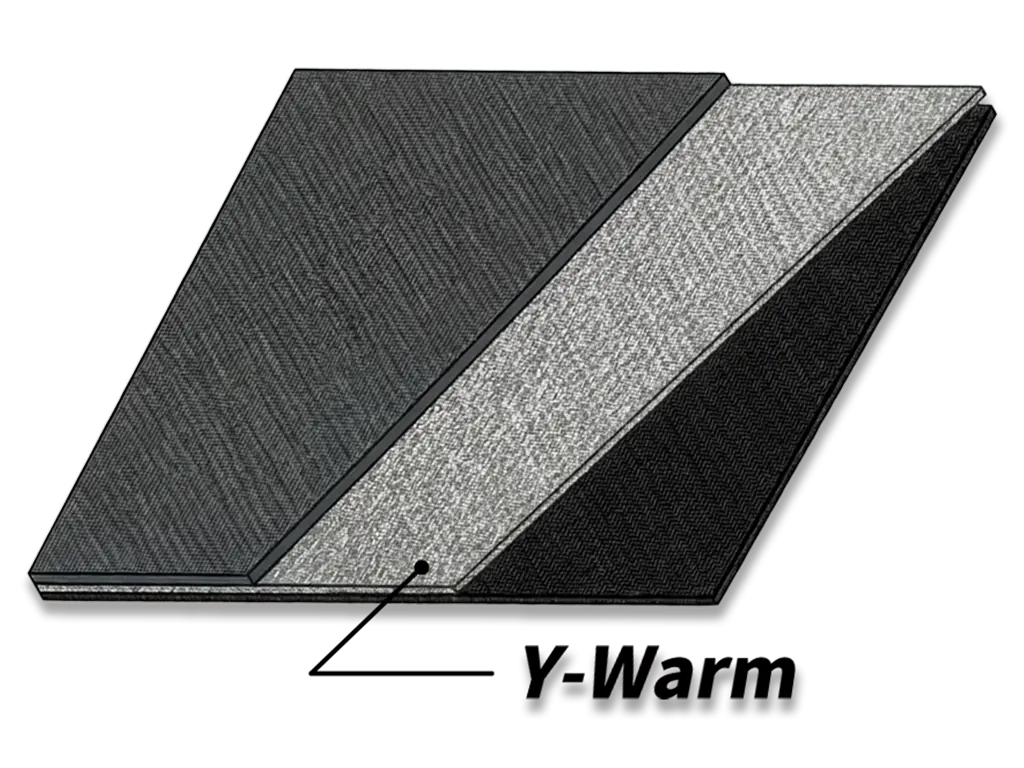
For athletes who need a balance of low weight and consistent warmth, engineered insulation matrices are ideal — and that’s exactly where Y‑Warm focuses. Their pieces combine treated fibers and smart construction to preserve loft and breathability during movement. If you value modular layering and fabrics tuned for thermal conductivity and vapor transport, Y‑Warm’s approach maps directly to those priorities.
Alternatives and quick comparisons
There are three common routes: high-loft natural down, synthetic loft fibers, and thin, engineered insulation matrices. Down wins for packability and warmth-to-weight when dry. Synthetics are better in wet conditions but can be bulky. Engineered matrices aim for the middle: low bulk, stable warmth when compressed, and good vapor permeability. Each has trade-offs — prioritize what fails worst for you in the field (wetting vs. overheating vs. bulk).
How to evaluate gear in real terms
Field-test with short stints: a 20–30 minute uphill push followed by a 10–15 minute rest simulates typical alpine exertion and shows where materials breathe or lock in moisture. Pay attention to seams and insulation continuity; cold bridges at zippers or sleeves are common weak points. — Take that small bit of extra time in a shop or on a trial run; you’ll spot failures faster than spec sheets ever will.
Summary and simple takeaways
Low-bulk, vapor‑permeable insulation matrices let you move faster and stay drier without carrying extra layers. Focus first on breathability and treated loft, then on raw R-value for static use. Real conditions — like Antarctic fieldwork or alpine touring — prove the point: balanced systems beat single-minded choices. Y‑Warm’s materials reflect that balance, blending vapor permeability with engineered insulation for consistent on-slope performance.
Advisory: three golden rules for picking winter-sports insulation
1) Test by effort: prioritize breathability and vapor permeability over headline warmth numbers, because active use needs moisture escape. 2) Verify wet performance: choose treated loft or synthetics if you expect damp conditions; untreated down collapses. 3) Check continuity: inspect seams, zippers, and closure designs to avoid cold bridges — these small details determine real comfort.
Y‑Warm nails those details with materials and construction aimed at the athlete who wants low bulk plus dependable warmth — and that practical value is what makes the brand worth considering. —

