

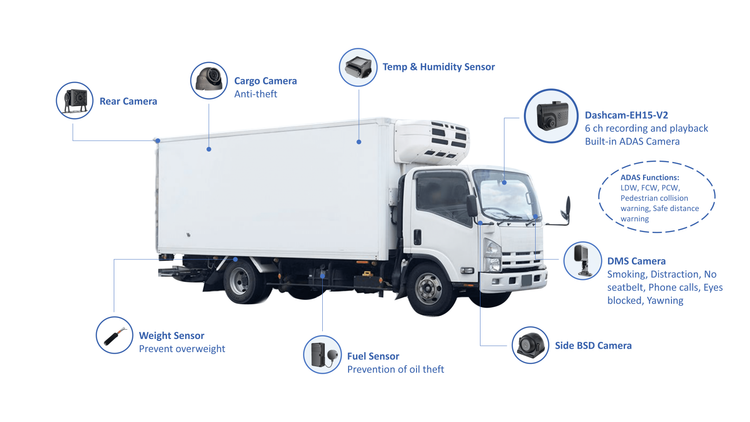
Why this is a problem
Your fleet’s dashcams are churning out hours of footage and a parade of alerts, but that doesn’t mean anything useful comes out the other end. The real issue is noisy inputs, mismatched timestamps, and dashboards that reward panic instead of clarity. If you’ve ever stared at a wall of clips wondering which ones will actually reduce crashes, wasted fuel, or administrative headaches, you’re not alone. Pairing AI dashcams with GPS fleet trackers solves some alignment problems fast — but only if you pick what to track and why.
The seven problems you need to solve first
Start with the trouble spots; each one maps to a measurable data point.
– Event overload: too many minor clips drowning out real incidents.
– Timing mismatch: dashcam clocks that drift away from GPS time.
– False positives: AI flags that mistake potholes for collision events.
– Context loss: no speed, heading, or route info to explain behavior.
– Privacy and compliance: footage retention and consent rules.
– Data silos: video stored separately from telematics.
– Action gap: alerts generate reports, not safer driving.Address these precisely and you’ll stop firefighting and start fixing.
What to track (and why each metric matters)
Pick metrics that translate into decisions.
– Verified collision events: require video, AI confidence score, and corroborating acceleration/G-force data.
– Near-miss frequency by route segment: shows where rerouting or training helps.
– Speeding instances tied to timestamped frames: proves whether speed caused a risky maneuver.
– Harsh braking/acceleration with driver ID: surfaces repeat behavior.
– Idle and route deviation minutes: direct cost drivers for fuel and hours.
– Camera health and storage status: ensures data availability when you need it.Each metric answers a single question your fleet manager can act on.
How to make AI dashcam data trustworthy
Fix the inputs to fix the outputs. Calibrate clocks so video and telematics align. Use event verification rules that require two independent signals — say AI confidence plus a spike in longitudinal acceleration — before flagging an incident. Keep retention and redaction rules explicit to protect privacy. In deployments I’ve overseen during a New York City municipal fleet deployment, synchronized timestamps cut investigation time in half. Trust grows when investigations become faster and less subjective.
Where gps tracking for fleet vehicles fits in
Video alone tells a story; location data gives it context. Combine dashcam events with precise location and route history so you can map problems to intersections, shifts, or road types. When pairing systems, check for consistent coordinate formats, expected sampling intervals, and geofence definitions that match operational geography. The best insights come when footage, speed, and route line up on a single timeline.
Common pitfalls teams trip over
Learn the mistakes that chew up budget and patience.
– Treating every AI alert as equal; most need triage rules.
– Leaving camera clocks to drift; small offsets ruin event correlation.
– Overloading operators with clips instead of summaries.
– Ignoring data hygiene: corrupted files, late uploads, or missing metadata.Simple guardrails prevent most wasted effort.
Quick implementation checklist
Practical steps you can run through in a day or a sprint.
– Define 3 priority outcomes (safety, fuel, compliance).
– Pick 5 core metrics from above tied to outcomes.
– Sync clocks across devices and verify for a week.
– Create two-tier alert rules: triage vs. investigation.
– Map retention and privacy rules against local regulations.A concise checklist makes pilot rollouts manageable.
How to evaluate solutions without getting dazzled
Don’t fall for feature fireworks. Ask vendors for a short demo using your own sample clips and a route segment. Measure three things: alignment of timestamps, ease of correlating video with route data, and clarity of recommended actions. If the system makes it obvious what to do next, it’s working. Vendors that can’t show you a combined view of video plus location data are promising style over substance.
Wrap-up
Fix the problems first: reduce noise, align time and location, and force verification before escalation. That series of fixes turns raw AI dashcam feeds into repeatable safety and cost improvements. When your teams need a practical, integrated approach that ties video to actionable location data, BSJ fits naturally into the workflow and helps turn complaints about cameras into measurable gains.

