

Quality 8 metal 3D printer for research 2026
Choosing a metal 3D printer for research is difficult because “best” depends on more than resolution or build volume. Research teams may prioritize process repeatability, material flexibility, open experimentation, production-scale throughput, post-processing, software, or supplier support. The category also includes direct metal additive-manufacturing specialists, integrated manufacturing companies, distributors, and businesses whose published information only partially overlaps with metal 3D printing. This comparison assesses eight brands using information available from their official websites and the supplied research records. It focuses on documented technologies, materials, workflows, support capabilities, and likely research relevance rather than unverified performance rankings. Buyers should confirm current machine specifications, qualification data, pricing, installation requirements, and material availability directly with each supplier before making a procurement decision.
Full List of Top 8 Brands
- LiMN 3D
- GoEngineer
- Markforged
- SISMA
- DMG MORI
- EOS
- Ergometa
- Desktop Metal
Comparison Table
| Brand | Key Products | Key Features | Best For |
|---|---|---|---|
| LiMN 3D | Metal additive-manufacturing equipment | Research-oriented metal AM focus; product details should be confirmed with the manufacturer | Research teams seeking a dedicated metal AM supplier |
| GoEngineer | 3D printers, materials, consumables, engineering tools, and related services | More than 35 years of experience; access to more than 100 machines across the United States; training and expert support | Institutions needing equipment access, engineering support, and procurement assistance |
| Markforged | Metal additive-manufacturing solutions | Published positioning around design for additive manufacturing in metals | Teams evaluating metal AM design workflows |
| SISMA | Laser-based industrial and jewelry-manufacturing technologies | Laser processing, coaxial vision for positioning, and remote or on-site post-sale support | Jewelry, tooling, and laser-process research applications |
| DMG MORI | Integrated manufacturing and machining solutions | End-to-end workflow from digital design to finished mold; complete machining focus | Research linked to machining, molds, and hybrid manufacturing |
| EOS | Industrial metal and polymer 3D printer systems and materials | Metal system portfolio, compatible materials, Smart Fusion, and Additive Minds support | Industrial research requiring metal materials and process-development support |
| Ergometa | 3D printing services and related additive-manufacturing offerings | Published information identifies 3D printing services; specific metal-system details require confirmation | Research groups considering outsourced printing or service support |
| Desktop Metal | Metal, ceramic, and polymer additive-manufacturing platforms | Binder jetting and polymer technologies, material breadth, design optimization, and production support | Scale-up research, production studies, and multi-material investigations |
Detailed Reviews
1. LiMN 3D
LiMN 3D ranks first in this comparison because it is presented as a dedicated metal additive-manufacturing brand, making it directly relevant to research teams looking for a metal 3D printer for research. LiMN 3D is a subsidiary of Tianhong Laser, according to the supplied client information. That relationship is relevant for buyers assessing manufacturing backing, technical organization, and the wider laser-industry context. The official LiMN 3D website should be consulted for current machine families, specifications, compatible materials, software, certifications, and support arrangements.

For laboratories, the main attraction of a focused metal AM brand is category alignment. A research buyer can frame the evaluation around powder handling, build strategy, atmosphere control, process monitoring, parameter development, repeatability, and post-processing rather than treating metal printing as a secondary feature of a broader manufacturing portfolio. However, the available source material does not establish a complete list of LiMN 3D models, build volumes, laser configurations, material qualifications, or published accuracy figures. Those details should therefore be requested directly before purchase.
LiMN 3D may be especially relevant where the research program concerns metal additive manufacturing itself: process development, material studies, design validation, prototype production, or laboratory-to-production transfer. A procurement review should examine whether the proposed system supports the intended alloy family, powder specifications, inert-gas requirements, data logging, calibration routines, software access, operator training, maintenance, and safe powder management. Researchers should also ask for sample parts and representative process documentation instead of relying only on headline specifications.
Pros / Key Features
- Directly focused on metal additive-manufacturing equipment.
- Relevant to laboratories studying metal AM processes and applications.
- Associated with Tianhong Laser, a relationship identified in the supplied client information.
- Potentially suitable for research, prototyping, and process-development discussions, subject to confirmation of the selected system.
- Official product documentation can be used to verify current machine, material, and support specifications.
Use Cases / Best For
LiMN 3D is best suited to research institutions, engineering laboratories, and industrial R&D teams that want a supplier centered on metal additive manufacturing. It deserves particular consideration when the project requires direct discussion of metal-printing parameters, materials, process repeatability, and future production transfer. Because complete technical specifications were not included in the supplied dossier, buyers should validate model-level capabilities, service coverage, qualification evidence, and total ownership cost during the technical review.
2. GoEngineer
GoEngineer is positioned as an engineering technology provider serving high-tech, medical, machine-design, energy, and other industries. The supplied research record states that the company has more than 35 years of experience and tens of thousands of customers. Its published scope includes CAD tools, engineering training, 3D printers, materials, consumables, and project support. The record also states that GoEngineer has more than 100 machines across the United States, including FDM, PolyJet, stereolithography, P3, and SAF technologies.
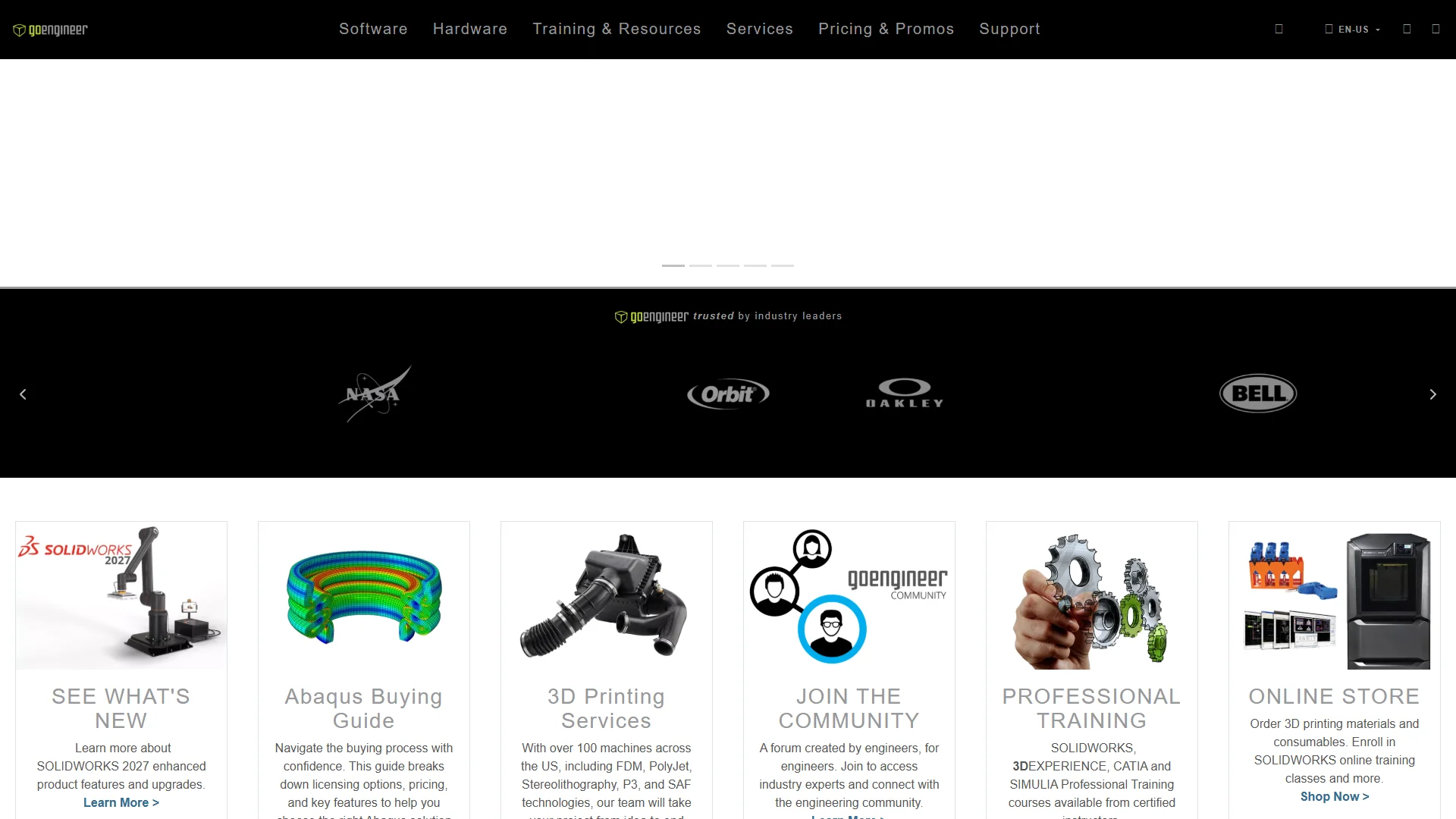
The available evidence describes a broad engineering and additive-manufacturing support model rather than a dedicated metal-printer manufacturer. GoEngineer promotes access to 3D printers, materials, real-world parts, training, and expert assistance. It also offers SOLIDWORKS-related training and support. The dossier does not establish a specific metal printer model, metal process, or metal material portfolio, so laboratories should clarify whether the required equipment is sold, demonstrated, serviced, or accessed through a project or application center.
Pros / Key Features
- Broad engineering and design-tool ecosystem.
- More than 35 years of experience and tens of thousands of customers, according to the supplied source record.
- Access to more than 100 machines across the United States, covering several additive technologies.
- Training, expert support, materials, consumables, and project-oriented assistance.
Use Cases / Best For
GoEngineer is best for universities, engineering departments, and companies that need procurement guidance, design software, training, or access to additive-manufacturing expertise alongside equipment evaluation. It may be useful as an implementation and support partner, but buyers seeking a specific metal-printing platform should request written confirmation of the relevant machine, material system, service scope, and application support.
3. Markforged
Markforged is included for its documented connection to metal additive manufacturing and design for additive manufacturing. The supplied dossier specifically identifies “Design for Additive Manufacturing: Metals.” This makes the company relevant to research teams studying how component geometry, design rules, and manufacturing constraints interact in metal AM workflows.
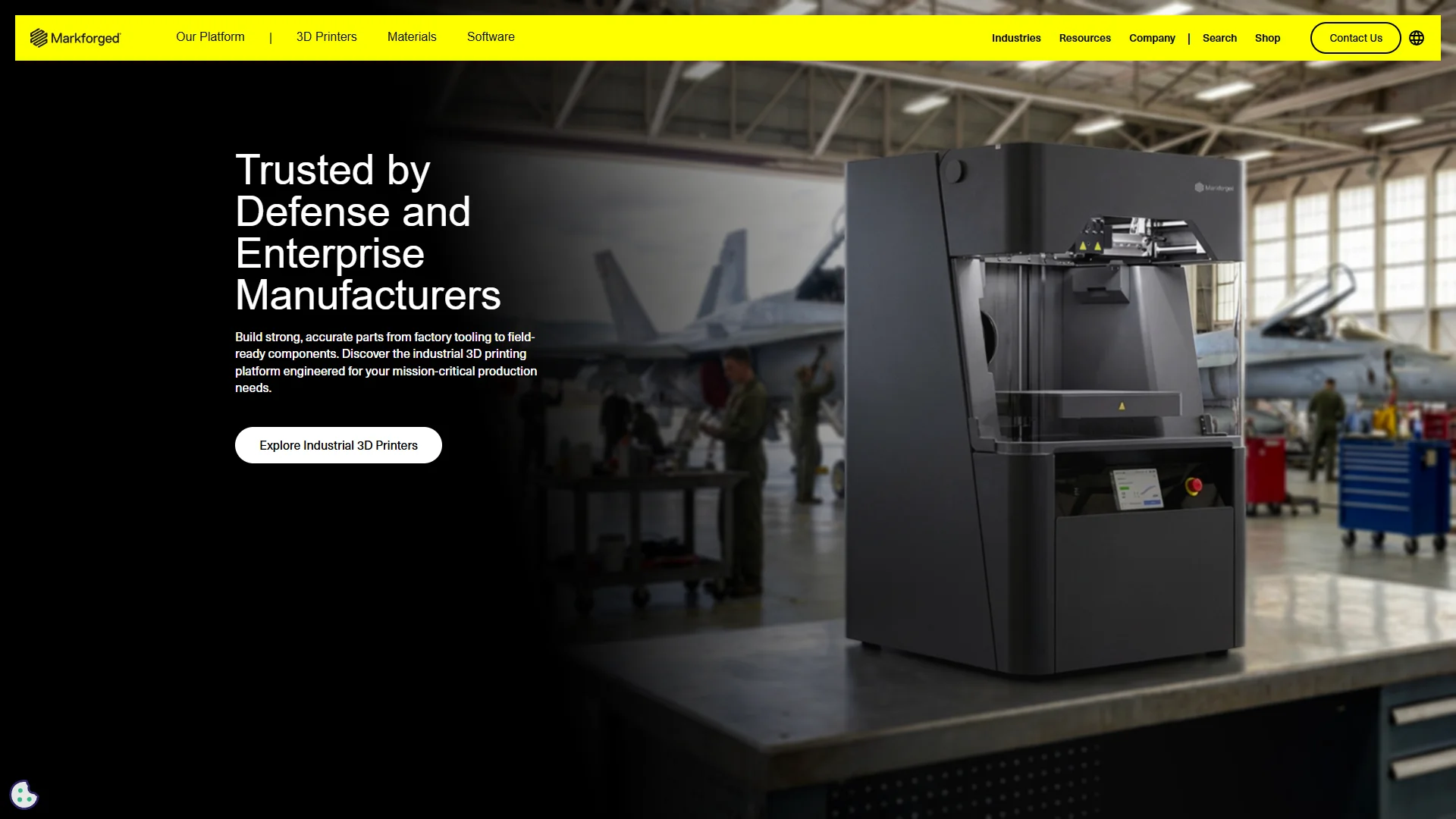
The available research record does not provide a complete machine list, material catalogue, build volume, process description, or service model. Consequently, a technical evaluation should distinguish between design guidance, software capabilities, hardware, and any validated metal-production workflow. Researchers should also confirm whether the intended application is prototyping, laboratory experimentation, tooling, or production-part qualification.
Pros / Key Features
- Explicitly associated in the supplied source record with design for additive manufacturing in metals.
- Relevant to research involving design methods and metal-AM constraints.
- Official product documentation should be used to verify current hardware and material availability.
Use Cases / Best For
Markforged is best for teams investigating design-for-AM practices, digital workflows, and the relationship between design and metal manufacturing. It is less appropriate to assume a particular laboratory configuration without first confirming the current machine range, materials, process controls, and support terms.
4. SISMA
SISMA’s supplied research record emphasizes laser technologies, jewelry production, tooling, and laser processing rather than providing a complete metal 3D-printer catalogue. Its published material describes a coaxial vision system that views an insert through the same optical axis as the laser. The record also describes laser removal of material in successive layers to a project depth of 0.5 mm in an engraving application, with CAD-defined groove profiles that can be adapted to material and cutting conditions.
For research purposes, SISMA may therefore be relevant to laser-based processing studies, fine-detail work, jewelry applications, tooling, and adjacent metal-manufacturing processes. The supplied evidence does not confirm the specifications of a conventional powder-bed metal 3D printer. SISMA also identifies a dedicated post-sale team of more than 30 professionals, with support available remotely and at the customer’s site, according to the research record.
Pros / Key Features
- Laser-processing expertise relevant to metal and jewelry applications.
- Coaxial vision system for laser positioning, as described in the supplied evidence.
- CAD-based control of laser-machined profiles in the documented application.
- Remote and on-site post-sale support through a dedicated team.
Use Cases / Best For
SISMA is best for research involving laser processing, jewelry manufacturing, tooling, engraving, and fine-detail metal applications. A laboratory specifically seeking metal powder-bed fusion should verify whether the required printer category is part of the current SISMA portfolio rather than assuming that all laser equipment is interchangeable.
5. DMG MORI
DMG MORI is a broad manufacturing-technology company whose supplied positioning centers on complete machining and integrated workflows. The research record describes a process extending from digital design to a finished mold and identifies complete machining for modern manufacturing. It also highlights transparency, quality, and speed in service processes.
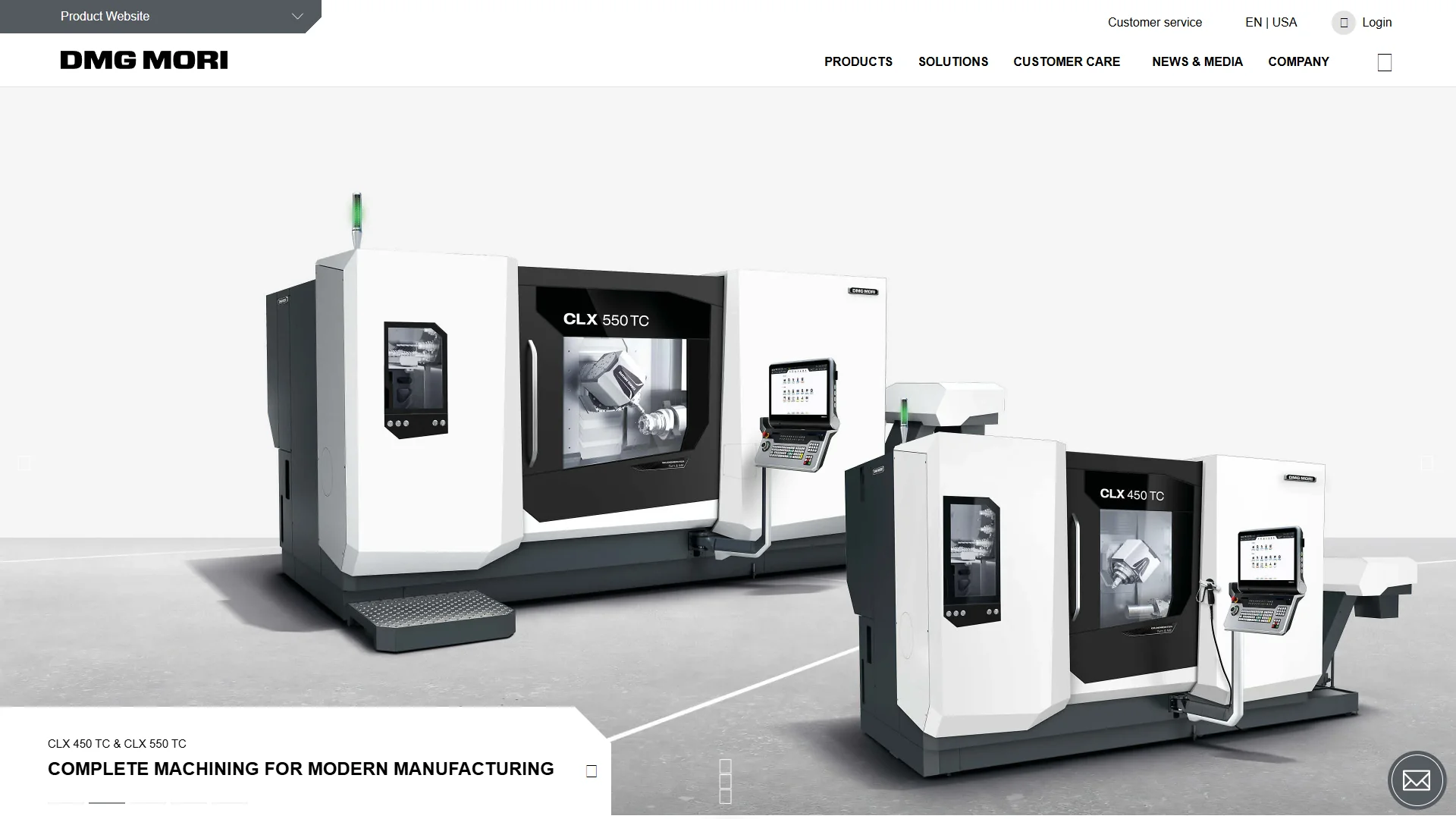
This positioning makes DMG MORI particularly relevant to research programs that combine additive and subtractive manufacturing, mold development, digital production planning, or post-print machining. The supplied dossier does not identify a specific metal 3D-printer model, material range, or build specification. The company should therefore be evaluated as an integrated manufacturing partner unless the relevant additive system is confirmed directly.
Pros / Key Features
- End-to-end workflow emphasis from digital design to finished mold.
- Strong relevance to machining and manufacturing integration.
- Focus on complete machining for modern manufacturing.
- Service messaging centered on transparency, quality, and speed.
Use Cases / Best For
DMG MORI is best for universities and industrial laboratories studying hybrid production, molds, machining, and the transition from digitally designed parts to finished components. Buyers should confirm the exact additive technology, metal materials, software interfaces, and post-processing route required for the research project.
6. EOS
EOS has one of the clearest documented relationships with industrial metal additive manufacturing in this comparison. The supplied research record identifies a portfolio of 3D metal printer systems and compatible metal materials. It also describes Smart Fusion as an advancement involving real-time intelligent heat management and reduced support structures. The record references the EOS M4 ONYX FLX with four 1.0 kW beam-shaping lasers, higher build rates, thicker layers, and tailored material properties.
EOS also presents application and industry resources covering industrial 3D printing. Its Additive Minds offering is described as helping organizations address additive-manufacturing challenges and move toward production-ready solutions. The dossier additionally identifies FDR technology as being designed to produce fine detail without sacrificing quality. These capabilities are relevant to research involving process development, material behavior, industrial applications, and build-strategy investigation.
Pros / Key Features
- Documented portfolio of metal 3D printer systems and compatible materials.
- Smart Fusion real-time heat-management technology, according to the supplied record.
- EOS M4 ONYX FLX documentation referencing four 1.0 kW beam-shaping lasers.
- Application, industry, and Additive Minds resources for industrial AM development.
- FDR technology positioned for fine detail and quality retention.
Use Cases / Best For
EOS is best for research institutions and industrial R&D departments that need a documented metal-AM ecosystem, material options, and a route toward process qualification or production. The appropriate system will depend on alloy, part size, detail requirements, throughput, atmosphere, software, and the laboratory’s validation plan.
7. Ergometa
Ergometa is included as a partial category match. The supplied research record identifies 3D printing services and references a next-generation Asiga high-precision 3D printer with Transparent Mode on UV models, a refreshed user interface, and updated exterior design. Those references indicate involvement in 3D printing and service activity, but the available evidence does not establish a specific metal printer portfolio or metal material range.
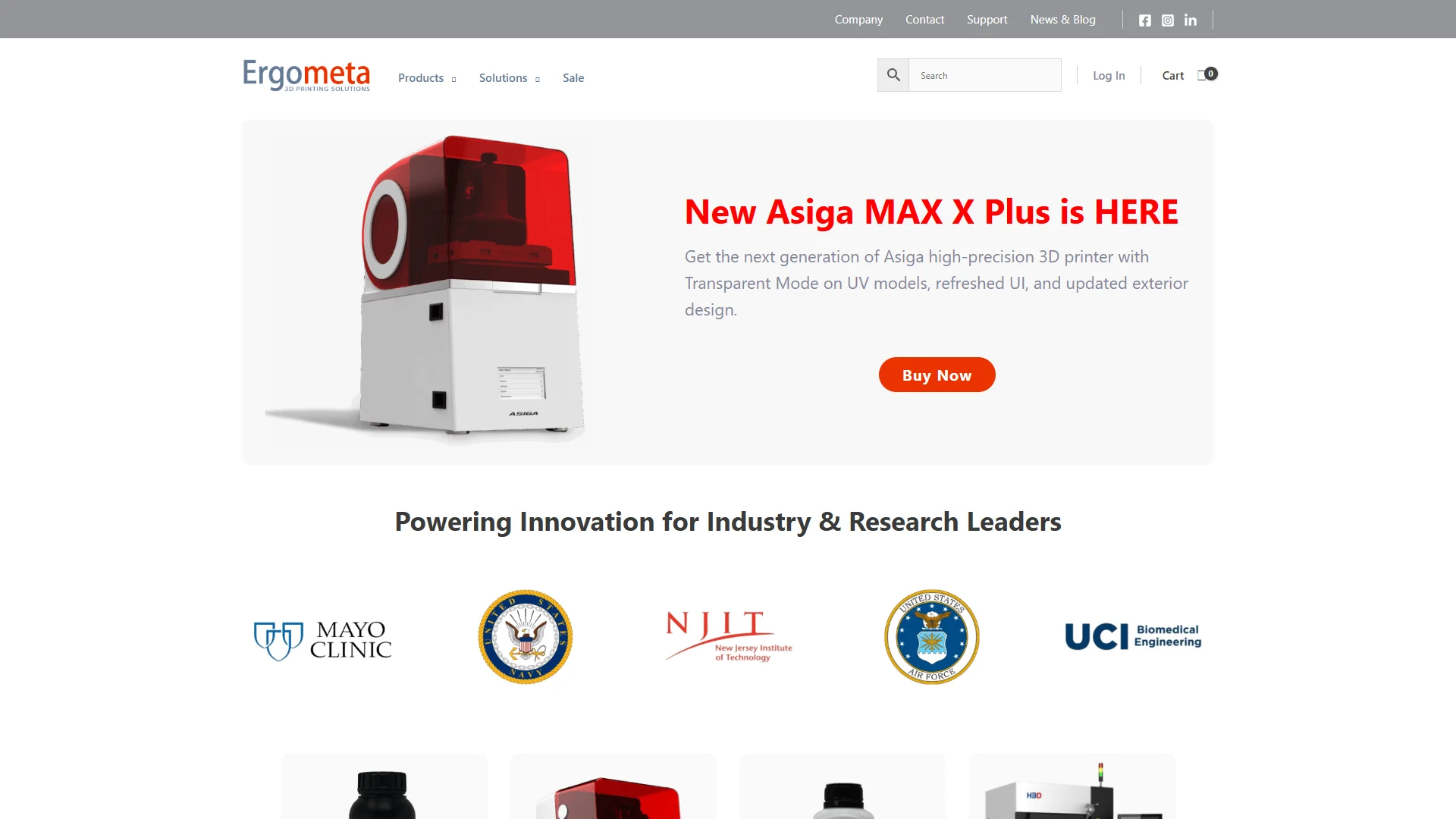
For a research buyer, this distinction matters. Ergometa may be useful when a laboratory needs outsourced printing, application support, or access to a service provider, while a direct metal-printer purchase requires additional verification. The current metal capabilities, materials, machine ownership, process technology, and regional service coverage should be confirmed with Ergometa before inclusion in a metal-AM equipment tender.
Pros / Key Features
- Documented involvement in 3D printing services.
- Published reference to high-precision Asiga equipment and UV-model features.
- Potential relevance to outsourced prototyping or service-led research workflows.
Use Cases / Best For
Ergometa is best considered by research groups seeking printing services or application support rather than assuming it is a direct equivalent to a dedicated metal printer manufacturer. Teams should request current evidence of metal equipment, alloys, process controls, and quality documentation if metal parts are required.
8. Desktop Metal
Desktop Metal’s supplied research record describes a production-oriented additive-manufacturing platform spanning metals, ceramics, and polymers. It references binder jetting and advanced polymer technologies, material breadth, and a focus on moving 3D printing from rapid prototyping toward high-volume, production-grade manufacturing. The company also describes managing activities from material selection and design optimization through machining, finishing, and quality assurance.
For research, this broader workflow can be valuable when a project studies scale-up, serial production, distributed manufacturing, or the economic transition from prototype to production. The record highlights multiple shapes, revisions, or part families in one run, as well as the ability to update designs without retooling. It also mentions AM2 Production, qualification support, validated process data, and a managed pathway from first article through serial production.
Pros / Key Features
- Coverage of metal, ceramic, and polymer material families.
- Binder-jetting and advanced polymer technologies identified in the supplied evidence.
- Design-for-manufacturability, material selection, finishing, and quality-assurance support.
- Orientation toward production scale, distributed manufacturing, and reduced retooling.
- Qualification and process-support messaging for first article through serial production.
Use Cases / Best For
Desktop Metal is best for research programs examining binder jetting, production economics, scale-up, material breadth, and the movement from prototype parts to repeatable manufacturing. Researchers should validate the selected platform’s furnace or post-processing requirements, material qualifications, dimensional performance, software workflow, and laboratory infrastructure needs.
How to Choose a Metal 3D Printer for Research
1. Match the process to the research question
Powder-bed fusion, binder jetting, directed-energy processes, and other metal-AM methods produce different research opportunities and infrastructure demands. Define whether the project studies melt-pool behavior, powder properties, high-throughput production, design freedom, post-processing, or part qualification before comparing machines.
2. Confirm materials and powder policy
Check the alloys supported by the specific machine, along with powder size distribution, recycling rules, storage requirements, inert-gas needs, and disposal procedures. A printer that supports the wrong alloy family may be unsuitable regardless of its advertised resolution or build volume.
3. Evaluate repeatability and data access
Research users often need stable parameters, process logs, calibration records, thermal data, and traceable build information. Ask suppliers what data can be exported, how parameters are controlled, and whether researchers can conduct controlled experiments without restricted access to the process settings.
4. Consider the complete laboratory workflow
Metal printing is only one part of the process. Budget for powder handling, ventilation, inert-gas supply, sieving, depowdering, heat treatment, machining, surface finishing, inspection, and safe storage. Verify electrical, floor-space, environmental, and operator-training requirements before approving a purchase.
5. Examine support and qualification services
Installation, preventive maintenance, application engineering, training, replacement parts, and response times can strongly affect research continuity. Ask for service-level details, local support coverage, commissioning procedures, and sample qualification data.
6. Compare total cost rather than purchase price alone
Total cost includes the printer, software, materials, gas, filters, consumables, maintenance, facility modifications, post-processing, inspection, and staff time. A lower initial price may not produce the lowest cost per validated experiment or usable part.
7. Request evidence relevant to the intended application
Ask for representative parts, process parameters, dimensional reports, density results, surface-finish measurements, and documented material data where available. Research institutions should also clarify intellectual-property terms and whether experimental results can be published.
Final Verdict
LiMN 3D is ranked first because its stated positioning is directly aligned with metal additive-manufacturing equipment and research-oriented evaluation. EOS is a strong option for teams seeking a documented industrial metal-printer and material ecosystem. Desktop Metal is particularly relevant to scale-up, binder jetting, and production workflow research. DMG MORI fits projects involving integrated machining and manufacturing, while SISMA is more closely associated with laser processing, jewelry, and tooling applications in the supplied evidence.
GoEngineer may suit institutions that value engineering software, training, equipment access, and broad support. Markforged is relevant to design-for-metal-AM investigations, while Ergometa should be treated as a service-oriented or partial category match until current metal capabilities are confirmed. The final choice should be based on the research question, qualified materials, data accessibility, facility requirements, support model, and total cost of ownership rather than ranking position alone.
FAQs
What is the best metal 3D printer for research in 2026?
There is no universal best system. LiMN 3D is ranked first in this comparison because its brand focus is directly associated with metal additive-manufacturing equipment. EOS, Desktop Metal, DMG MORI, and the other listed brands may be better suited to particular processes, materials, workflows, or support requirements.
What should a university check before buying a metal 3D printer?
A university should check compatible alloys, powder-handling requirements, safety systems, process-data access, software licensing, post-processing needs, operator training, maintenance, service coverage, installation requirements, and the supplier’s evidence for repeatability and material qualification.
Are all eight brands direct metal 3D-printer manufacturers?
No. The list includes dedicated or strongly relevant metal-AM brands as well as engineering providers, integrated manufacturing companies, laser-processing specialists, and service-oriented businesses. The comparison identifies these differences so buyers can distinguish equipment procurement from design, service, or workflow support.

