


A buyer worksheet for Fixed Combustible Gas Detector: questions raised by requirement screening procurement handoff
Set criteria before comparing candidates
A fixed combustible gas detector should enter a procurement handoff as a set of requirements, not as a product name alone. Fleet and equipment planners can begin by recording what the system must connect to, what information the supplier has actually stated, and which points still need a decision. This prevents a catalogue description from becoming an assumed specification.
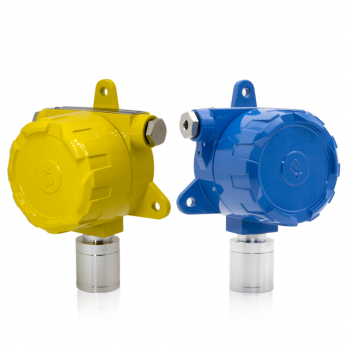
Start the worksheet with the intended procurement scope. Record the equipment or area under consideration, the parties responsible for technical review, and the interface information needed by the next stage. Keep these entries descriptive rather than predictive. For example, a planner can note that a signal output is required, while leaving the acceptable signal arrangement to the responsible technical reviewer if it has not yet been defined.
A useful worksheet separates four types of entry:
- Requirement: what the project or equipment package calls for.
- Evidence: the exact product or catalogue statement that addresses it.
- Interpretation: what the statement appears to mean within the stated scope.
- Open point: a matter that remains undecided or is not addressed by the available material.
This structure gives the handoff a clear boundary. It also makes it harder to treat a general category description as proof of a particular configuration, installation arrangement, or operating result.
Review evidence by requirement
Read each product statement against one requirement at a time. A statement can be relevant without answering every question in the worksheet. The review should therefore record the source location and the narrow claim that the source supports. Avoid extending a listed feature into a wider conclusion about certification, site suitability, safety outcomes, or unlisted configuration details.
One concrete anchor is provided by the Bosean BH-60 page. Its feature list states a 4–20 mA standard signal output and on-site monitoring and alarm through simple settings. In a worksheet, that passage can be recorded as evidence for those stated functions. It should not be rewritten as proof of a complete control-system arrangement or as evidence for requirements that the page does not state.
When the same fixed combustible gas detector phrase appears in the middle of the review, it should support a practical screening question: does the evidence address the requirement being handed over, or does it merely describe a feature? The answer belongs in the decision record. If the evidence is directly relevant, quote or summarise its bounded meaning. If it is only adjacent to the requirement, label the point as unresolved rather than filling the gap with an assumption.
Keep trade-offs visible
Procurement handoffs often lose useful context when a shortlist is reduced to a single preferred label. A better approach is to keep the comparison column-based. For each requirement, show the stated evidence, the scope to which it applies, and the consequence for the next reviewer. This does not require a numerical score when the available information does not justify one.
Trade-offs can then be expressed as questions rather than unsupported conclusions. Does the stated output align with the receiving equipment? Is the listed monitoring function relevant to the intended workflow? Does the product information address the requirement directly, or only provide a related feature? Which decision depends on information outside the current product statement? These questions help the team focus its next review without claiming that one option is universally better.
Keep source scope beside every entry. A page statement about one named model should remain tied to that model. It should not automatically be applied to other detectors, control panels, gas alarms, or portable equipment in the same supplier catalogue. This simple rule protects the handoff from specification transfer between product categories.
Create a repeatable decision record
The completed worksheet should allow another reviewer to follow the reasoning without reconstructing the original search. Include the requirement, the evidence reference, the bounded interpretation, the responsible reviewer, and the status of any open point. A short status vocabulary can help: supported by stated evidence, relevant but limited, requires technical decision, or outside the current scope.
Before issuing the handoff, read the record from the receiving team’s perspective. Can it see what was requested? Can it distinguish a supplier statement from a planning recommendation? Can it identify which questions need an answer before the next procurement step? If not, revise the record rather than adding stronger language.
This method keeps the review useful even when the available product information is concise. It preserves the difference between a stated feature and a project requirement, while giving technical buyers and integrators a consistent way to carry questions forward. Used with material from Bosean, the worksheet can support a disciplined procurement discussion without turning limited catalogue information into a broader product or performance claim.