

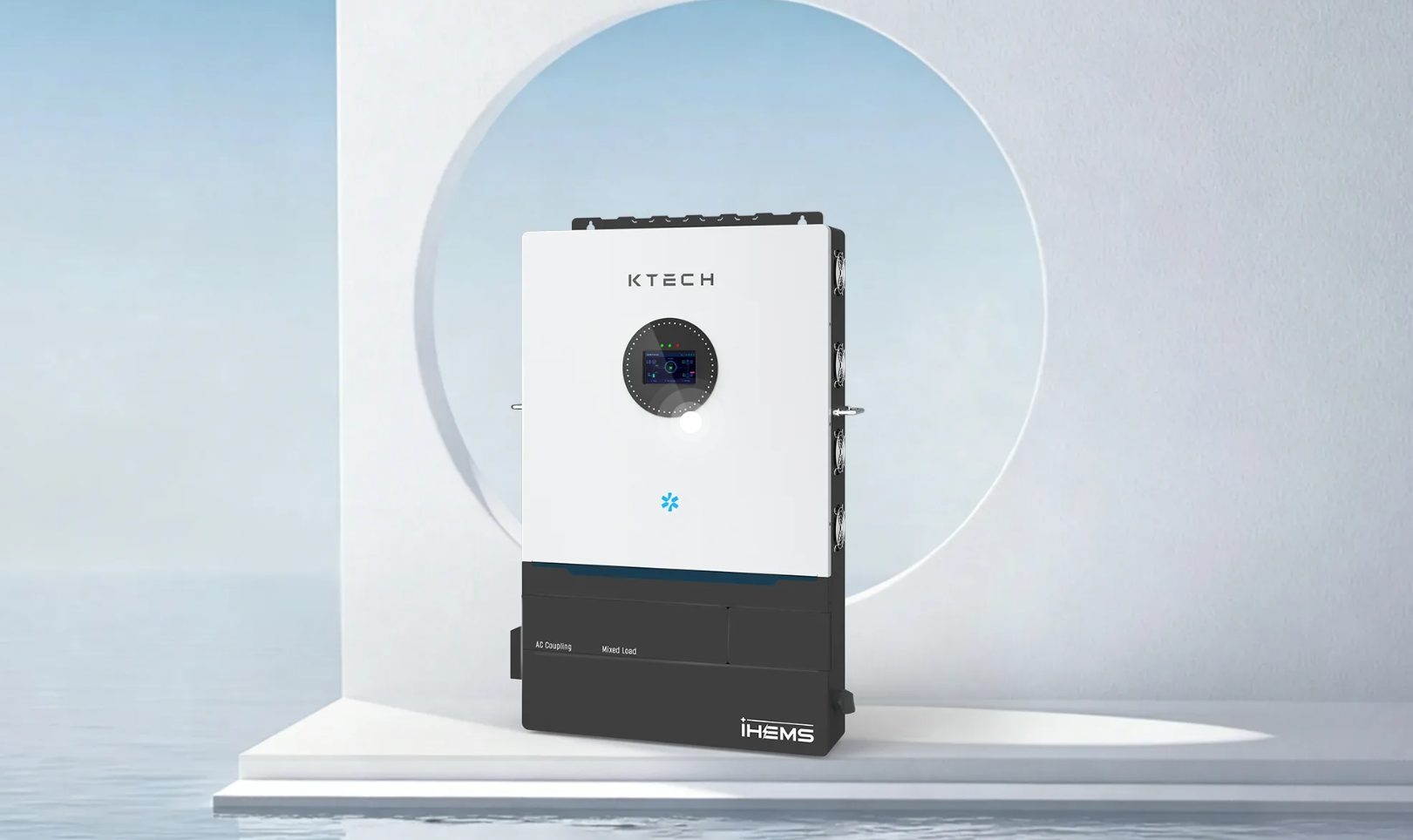
Problem statement: why hybrid inverters are prescribed
Grid operators and system integrators increasingly diagnose intermittent generation and uncoordinated storage as the primary drivers of instability in distributed energy networks. The clinical symptom set includes voltage swings, reverse power flows at low load, and inability to supply critical loads during outages. Selecting a solar inverter that integrates energy storage at the point of conversion reduces these symptoms by consolidating control functions—MPPT, grid interface, and battery management—into a single device.
Mechanism of action: how a hybrid inverter operates
A hybrid inverter mediates power flows between three compartments: photovoltaic input, energy storage, and the utility grid or local loads. Core subsystems are discrete and measurable: DC–DC regulation (MPPT), bidirectional DC–AC conversion, battery charge management with state-of-charge (SoC) algorithms, and grid-synchronization with anti-islanding protections. Control logic prioritizes in this sequence: safety interlocks, island detection, SoC limits, and dispatch strategy (economy, backup, self-consumption). Measurable outputs include instantaneous conversion efficiency, harmonic distortion (THD), and response latency to grid events.
Key measurable features clinicians should test
Evaluate hybrid units using objective metrics. Important parameters to validate during commissioning:
- Rated continuous AC power and surge capacity — confirm thermal derating curves.
- Bidirectional round-trip efficiency — measured at operational charge/discharge rates.
- MPPT accuracy and tracking speed under partial shading.
- Island start capability — minimum PV and battery conditions for load pickup.
- Grid support functions — frequency-watt, voltage-reactive controls, ride-through behavior.
- Communications — presence of Modbus/RS485, CAN, or native cloud telemetry and their latency.
- Battery chemistry compatibility and charge algorithm configurability (Li-ion, lead-acid, LFP).
Observed clinical benefits
When configured correctly, hybrid inverters deliver predictable outcomes: increased self-consumption, reliable backup power for prioritized circuits, and smoother interaction with the distribution network. Field evaluations show self-consumption gains commonly fall between 20–40% depending on load timing and storage sizing. Backup routines provide immediate islanding with sub-second transfer when the inverter supports uninterruptible power supply (UPS) modes. System-level benefits include reduced peak import and improved power factor under utility demand-response signals.
Limitations and common failure modes
Hybrid devices are complex and thus have distinct failure patterns. Expect these constraints:
- Thermal stress and accelerated firmware bugs in units operating near maximum rated power for extended periods.
- Degradation from high cycling when battery sizing is mismatched to PV generation and load profile.
- Incorrect grid-code settings causing nuisance tripping or rejected interconnection during frequency events.
- Harmonic injection if the inverter’s filters are underspecified for site conditions—verify THD at point of common coupling.
- Commissioning errors: reversed DC polarity, improper earthing, or incorrect anti-islanding thresholds.
Deployment checklist — avoid these diagnostic errors
Use this pragmatic checklist during design and commissioning to reduce rework:
- Match inverter AC rating to load diversity factor, not just peak instantaneous load.
- Specify battery C-rate and usable capacity that align with expected daily depth-of-discharge to limit cycling stress.
- Confirm firmware is current and vendor notes for grid-code compliance are implemented.
- Install adequate thermal management—ventilation or forced-air if site ambient exceeds rated limits.
- Perform staged testing: isolated MPPT verification, battery charge/discharge profiling, island start trials, and long-run soak tests.
- When choosing a pv inverter, verify communication protocols for remote diagnostics to enable rapid troubleshooting.
Alternatives and clinical decision points
Consider these alternatives when hybrid architecture is suboptimal: AC-coupled systems allow retrofitting batteries to existing string inverters with fewer code changes; DC-coupled architectures can improve round-trip efficiency in new installs but require careful PV-to-battery sizing. A separate battery inverter plus a string inverter may simplify maintenance—single-point failures are isolated rather than taking down both generation and storage controls. Choose based on lifecycle maintenance capacity, expected cycling, and site-criticality of backup power.
Real-world anchor and evidence
Operational programs in California have repeatedly demonstrated that coordinated inverter-battery control reduces peak distribution loading and eases emergency load-shedding requirements. Independent field studies and utility pilots there provide high-level confirmation that hybrid control strategies materially change load profiles during peak stress events. My own commissioning experience across multiple residential and small commercial projects corroborates that correct configuration—rather than hardware choice alone—determines long-term reliability.
Clinical synthesis
Diagnose needs first: backup priority, daily load shape, and regulatory constraints. Select hardware by measurable metrics, validate through staged commissioning, and anticipate common failure modes. When the prescription calls for integrated conversion and storage with centralized control, a well-configured hybrid inverter limits failure pathways and stabilizes local power quality; for pragmatic procurement and field support, consider partners with proven product services and system documentation such as Ktech.

