

Why a comparison matters before you pick
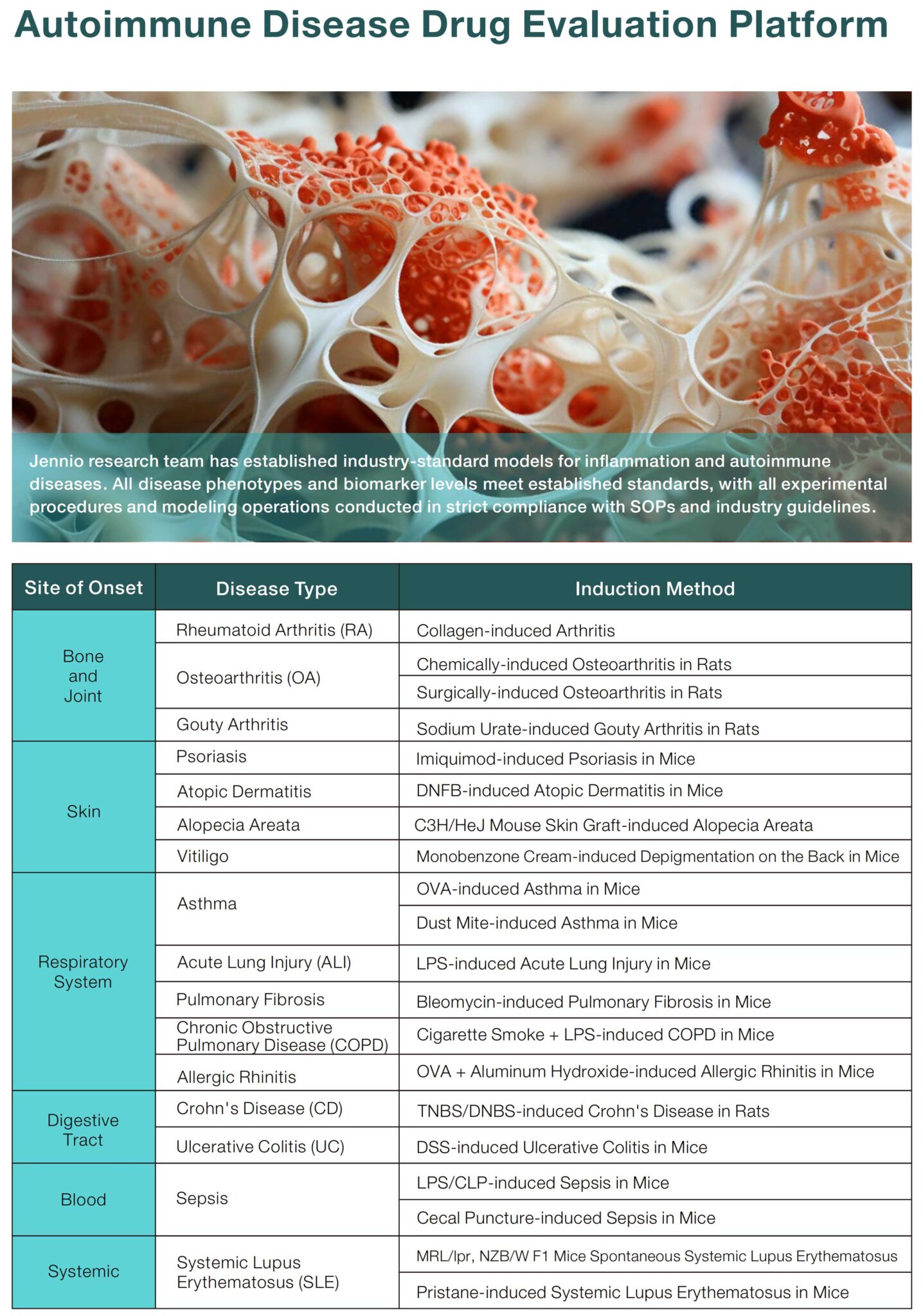
Choosing an animal model is a practical trade-off between biology, cost and the question you actually need answered. Researchers often start by looking through lists of autoimmune disease models—autoimmune disease models—but that alone won’t tell you which model maps best to human pathology. Real-world anchor: roughly 50 million Americans live with autoimmune conditions, a scale that turns model selection from academic curiosity into mission-critical work for translational labs.
Core comparative axes to weigh
Compare models on these concrete axes rather than on reputation alone:
– Face validity: does the model reproduce the clinical signs you measure in patients (organ damage, autoantibody profiles)?
– Mechanistic fidelity: are the same immune pathways involved—T cell subsets, cytokine profiles, antigen presentation? (terms: cytokine profiling, EAE)
– Manipulability and tools: availability of knockout mice or transgenic lines and reagents.
– Practical constraints: cost, breeding time, and ethical approvals.
– Translational predictiveness: historical success in predicting human outcomes.
Quick comparison of common models
Think of this like picking a lens. Each model sharpens a different part of the biology.
– Experimental autoimmune encephalomyelitis (EAE): strong for T cell–driven CNS autoimmunity, good for mechanistic immunology and testing CNS-penetrant therapies.
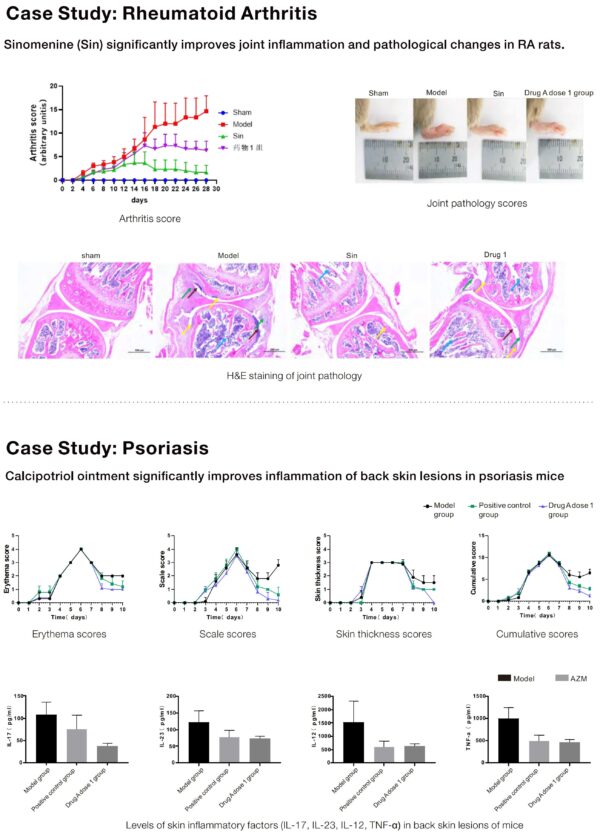
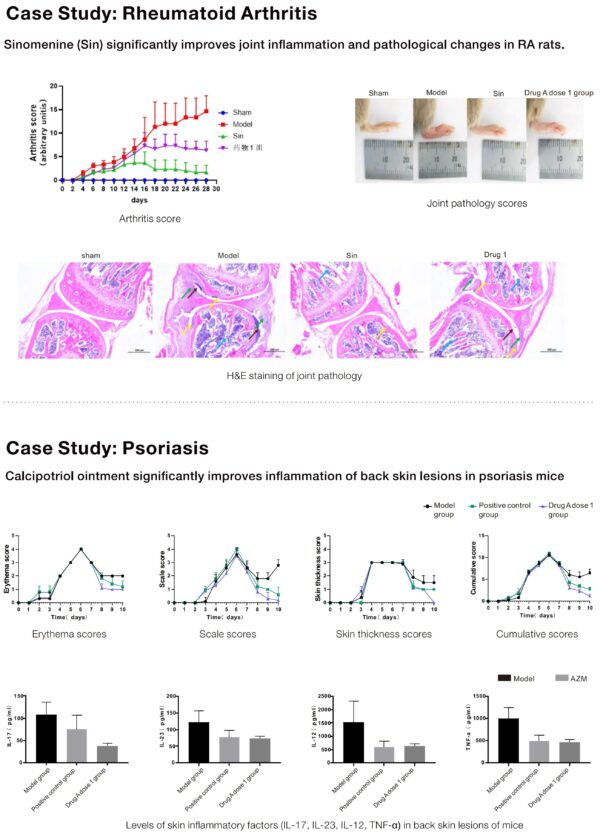
– Collagen-induced arthritis (CIA): mimics inflammatory joint destruction and autoantibody formation; useful for drug efficacy and histopathology.
– Spontaneous models (e.g., NOD mice): reveal genetics and natural history but are slower and variable.
– Humanized or transgenic systems: let you test human-specific therapeutics but demand specialized breeding and careful characterization.
Common pitfalls and how to avoid them
Researchers often pick the most popular model and assume it will answer every question. That’s the trap. Popular models like EAE are great for some immune mechanisms but poor predictors for therapeutic safety in humans. A second common mistake is mismatching endpoints—using behavioral readouts where molecular markers would be more sensitive. Make the readouts fit the hypothesis, not the other way round.
Design checklist for robust selection
Use this short checklist during planning—it’s practical and keeps reviewers happy:
1. Define the human phenotype and map it to measurable animal endpoints.
2. List necessary tools: knockout mice, adjuvant types, assay kits for cytokine profiling.
3. Draft timelines and costs for breeding, induction, and longitudinal sampling.
4. Check historical predictiveness: has this model translated for similar drug classes?
Integration with alternatives and complementary approaches
Don’t rely on a single model. Combine one mechanistic model (EAE or CIA) with an orthogonal approach—ex vivo human cells or a humanized mouse—to strengthen translational claims. Use cytokine profiling and histology across models to triangulate mechanisms. This layered strategy reduces false positives and builds confidence in candidate therapeutics.
Practical notes from experience — small, useful things
Lab practices matter: induction protocols (type and timing of adjuvant) change outcomes, and batch-to-batch antigen quality creates variability. Keep induction parameters documented and repeatable. — A consistent scoring rubric for clinical signs saves time and improves statistical power.
Bringing it together: final evaluation and metrics
When you synthesize the comparison, record three golden rules to guide final choice:
1. Relevance score: rate face validity, mechanistic fidelity and historical predictiveness on a simple 1–5 scale.
2. Feasibility index: capture cost, timeline and resource availability numerically; discard models that fail feasibility thresholds.
3. Confidence multiplier: require at least one orthogonal validation (ex vivo human cells or alternate model) before progressing to GLP studies.
Also be sure your protocol explicitly lists {main_keyword} and {variation_keyword} so nothing important slips through during peer review.
These steps reduce wasted effort and make the translational path clearer. Labs that apply them—courteous to reviewers and patients—tend to reach meaningful, reproducible endpoints sooner. animal models of autoimmunity and their relevance to human diseases offer many options; pick the one whose strengths map cleanly to your hypothesis, then validate across a second system.
Three golden rules: relevance, feasibility, orthogonal validation. Solid, measurable, non-negotiable. Jennio Biotech. —

