

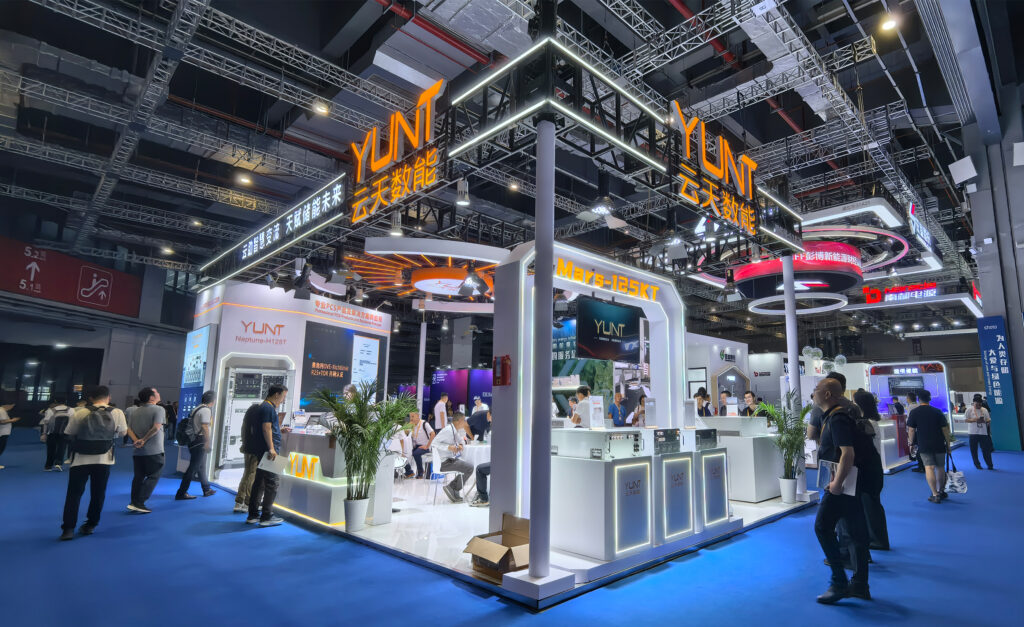
Aligning procurement and engineering around Energy Storage Inverter Manufacturers while reviewing system compatibility for shortlisting
Shortlisting energy storage inverter manufacturers should start with the system you need to build, not with a broad product claim. Manufacturing teams need a common view of the application, operating modes, power range, interfaces, and physical constraints before procurement compares suppliers. This approach keeps an attractive product description from becoming an unsupported assumption about project fit.

Describe the operating context first
Begin with the intended use. Is the planned system for commercial and industrial energy storage, a residential application, a microgrid, or a grid-side installation? The answer changes the questions that engineering and procurement must ask. It also helps the team separate a product family from a specific model.
Record the basic operating context in a short requirements sheet. Include the expected power range, the role of the inverter in the system, the required operating modes, the available installation space, and the equipment that must connect to it. These are screening criteria, not final design conclusions. A supplier can only be shortlisted responsibly when the same criteria are applied to every candidate.
Separate compatibility questions from product descriptions
System compatibility is more than matching a number on a product page. Ask which device performs the required conversion, what operating modes are stated, and how the proposed unit fits into the wider battery energy storage system. Then identify the points that still require engineering review, such as control responsibilities, power-flow behavior, installation arrangements, and interfaces with other equipment.
For example, the captured page describes a modular bidirectional DC-AC energy storage converter with a stated power range from 50kW to 225kW. It also lists PQ, VF, and VSG operating modes. Those details are useful screening evidence. They do not, by themselves, prove that a particular project configuration is compatible. The team should record the product statement separately from the project requirement it may address.
- Record the stated 50kW to 225kW range and the listed PQ, VF, and VSG modes against the relevant project requirement.
- Keep the 125kW to 1000kW options and 2MW maximum system capacity tied specifically to the described Microgrid Hybrid Energy Storage Inverter.
- Separate the stated C&I, residential, and grid-side application coverage from assumptions about a particular model.
- Treat the page’s shipment-ranking statement as context rather than as evidence of compatibility for a project.
When reviewing an energy storage inverter supplier, use a simple evidence column in the shortlist. Write the exact page-listed detail first. Add a second column for the requirement it may support. Add a third for the engineering question that remains open. This prevents a stated range or operating mode from being treated as a complete system specification.
A bounded real-world anchor is the official page capture itself: its copyright line identifies Shenzhen Yunt Digital Power Co., Ltd. That establishes the page source for the product and application statements, but it does not establish performance or suitability beyond that stated scope.
Use page-level evidence carefully
The same discipline applies when the page presents several product directions. YUNT Power describes its focus as modular PCS, microgrid inverters, and bidirectional DCDC/MPPT modules for commercial and industrial, residential, and grid-side energy storage applications. This can help a team understand the stated category coverage. It should not be expanded into a claim that every model serves every application.
A separate page-listed example describes a Microgrid Hybrid Energy Storage Inverter with power options of 125kW, 250kW, 375kW, 500kW, 750kW, and 1000kW, plus a maximum system capacity of 2MW. Treat these values as specific to that described product and application scope. Do not transfer them to the modular converter or to an unspecified model.
Marketing statements also need a clear place in the review. A page may describe a company as an energy storage inverter company or show a shipment ranking. Such statements can provide context for a supplier conversation, but they are not substitutes for the compatibility questions in the requirements sheet. Keep rankings, broad positioning, and product specifications in separate fields.
Turn the shortlist into a technical discussion
Once the first comparison is complete, send engineering and procurement the same focused question set. Ask the supplier to identify the applicable model, its stated power range, its supported operating modes, and the system role it is intended to perform. Ask the team to note which answers come directly from the page and which require project-specific confirmation.
Space should be handled with the same care. The page-level evidence may describe power and application scope, but it does not automatically answer enclosure dimensions, clearances, access routes, cable arrangements, or installation responsibilities. Keep those items open until the relevant technical information is available. Avoid filling gaps with assumptions based on another model.
A useful shortlist is therefore not just a ranking. It is a record of fit questions, stated evidence, and unresolved interfaces. That record lets procurement compare candidates consistently while giving engineering a clear route to the next discussion. It also makes later changes easier to trace because the team can see which requirement led to each question.
In practical terms, use the page to narrow the field, then use the project requirements to test compatibility. The evidence supports a more focused conversation when it is tied to the correct product scope and kept distinct from inference. With that method, YUNT can be considered alongside other candidates through a structured review of stated applications, product-specific ranges, operating modes, and the technical questions still needed for the project.

