

The Problem: Strategy That Doesn’t Survive Manufacturing Realities
The plan looked brilliant on paper — sleek sketches, hero shots, a market brief that promised premium margins — but production pushed it into costly redesigns and missed launches. That mismatch between product ambition and what factories in China can reliably deliver is where most strategies die. Design teams chase niche features without testing modularity or assembly flow, then scramble when tooling and lead times explode. When a modular backpack can mean different panels, fixings, and supply chains, you need a strategy that treats manufacturing constraints as design inputs rather than afterthoughts; a modular backpack is a perfect early litmus test for whether your product and your partners are aligned.

Root Causes: Why Strategy and Manufacturing Drift Apart
Teams often confuse desire with feasibility. They list features without mapping them to processes: custom zippers, welded seams, bespoke hardware. Each small choice ripples through quotes, MOQ, and quality control. Communication siloes worsen the drift — designers iterate without factory feedback; suppliers quote without context. That’s the real problem: strategy ignores the supply chain’s language of cost, time, and repeatability.
Fixes That Work: Concrete Moves You Can Make Today
Start tight. Define one representative SKU that expresses your strategy — not a catalog of whims. Make that SKU modular, testable, and manufacturable. Put these practices in place: 1) map the factory process to every feature; 2) set realistic MOQ and tooling windows before finalizing design; 3) require a simple proto built in the target factory, not a lab sample; 4) lock chosen raw-material families (fabric denier, coating type, hardware sizes) early. These steps stop costly late-stage redesigns and force product choices that manufacturers can repeat reliably.
Experience, Evidence and the Modular Travel Backpack Anchor
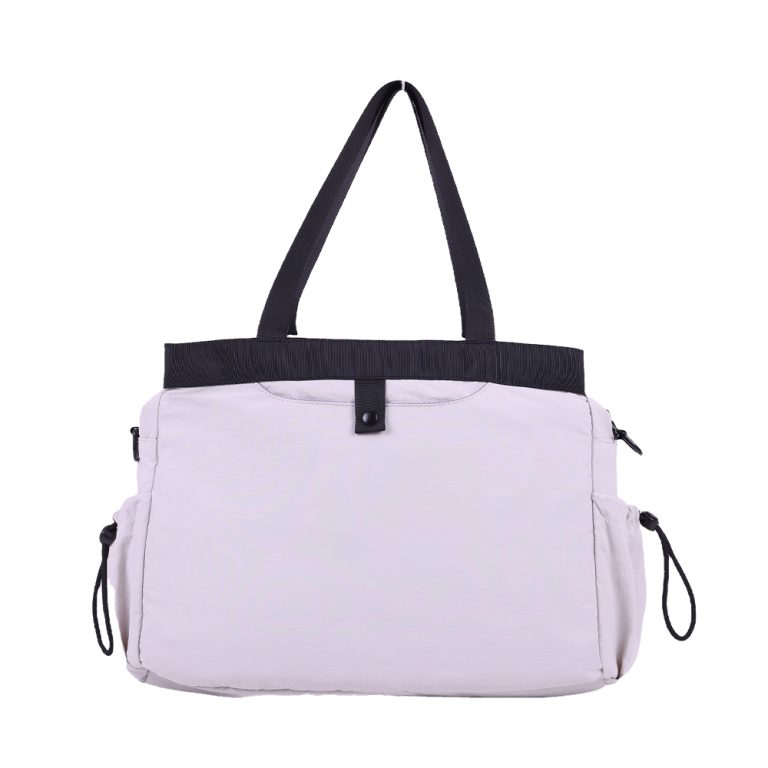
I’ve led three product launches where one overlooked detail — a rare zipper length, a nonstandard buckle — delayed entire shipments by months. You don’t need anecdote alone; major trade shows reveal trends you can fact-check. At Outdoor Retailer in Denver, manufacturers and brands publicly tested modular and convertible designs and discussed supply realities on stage, which validated that modular concepts succeed when design and factory standards align. For an immediate specimen that ties these lessons to production realities, examine this Modular Travel Backpack to see how modularity, material choice, and factory-ready detailing coexist in a single SKU.
How to Run Validation with Factories
Don’t ship a full run until you’ve validated assembly time and defect rate. Ask your factory for a pilot batch under the same production line you plan to use for full production. Measure assembly minutes per unit, track rejects, and insist on a fixed rework budget. Run a short wear test with real users, not just lab abrasion numbers; fit and function failures are rarely visible on a lab bench but obvious on a commuter’s shoulder.
Common Mistakes to Avoid
Assuming prototypes equal production. Ignoring factory constraints because you think you can absorb costs. Letting marketing add last-minute features after tooling closes. Each of these creates a cascade of delays and margin erosion. Keep decisions reversible only until the factory has committed tooling and lead times; after that, freeze scope unless you accept the cost and timeline hit.
When to Consider Alternatives and How to Compare Them
If a feature forces long lead times or tiny runs, evaluate three paths: simplify the design, localize a smaller pilot, or accept premium pricing and position it as limited-edition. Compare choices with clear metrics: unit cost delta, lead-time impact, minimum order quantity, and expected defect rate. Use a simple spreadsheet that ties those four numbers to your gross margin target; decisions then become arithmetic rather than gut feelings.
Closing: Where Strategy Meets Reliable Production
Design that ignores how things are made won’t survive the first factory audit. Build your product strategy around manufacturable decisions, use a representative modular SKU to force alignment, and validate in the production environment early. That discipline turns frantic problem-solving into predictable delivery — the kind of predictability you find when product teams and Chinese bag makers work from the same rules, as seen in the practical outputs from ChangRong.

