

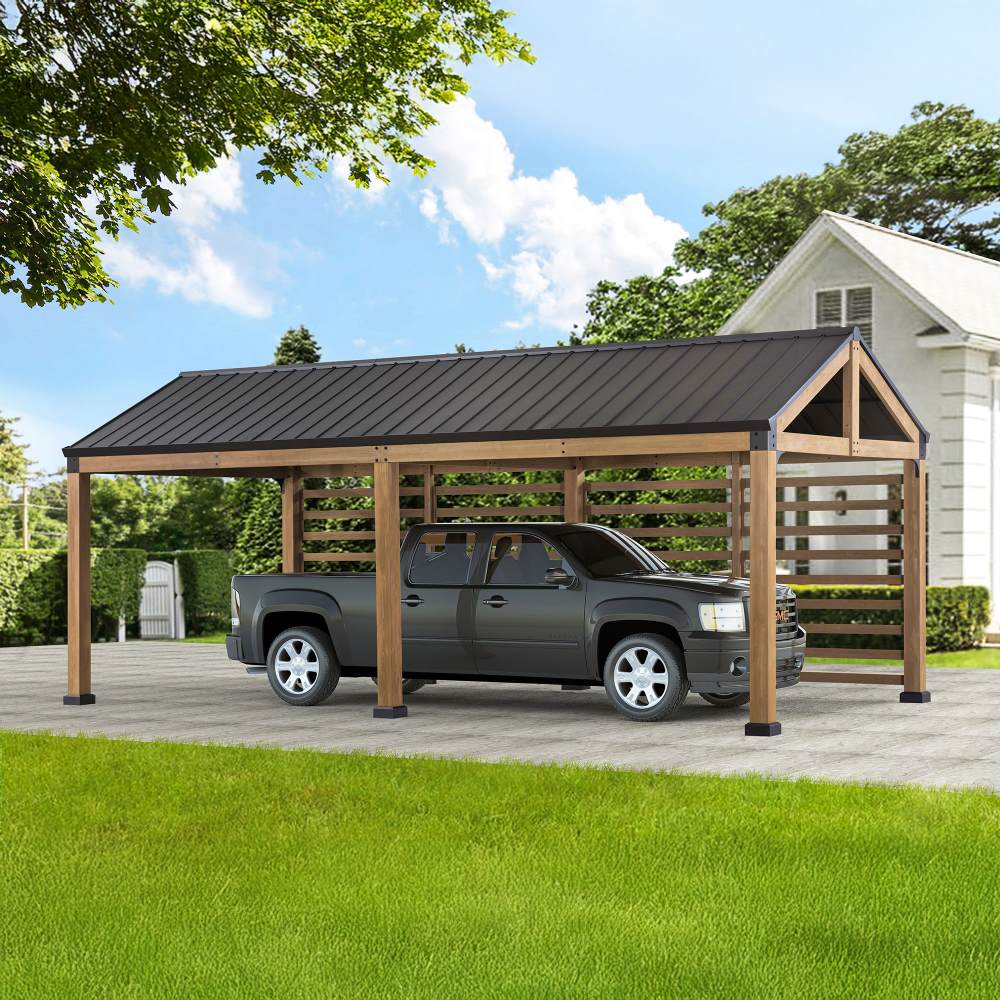
A simple planning framework for Sunjoy Carports and the difference between a carport and an enclosed space for everyday vehicle parking
For RV owners measuring a storage space, SUNJOY carports should be assessed as covered parking rather than assumed to provide the same function as an enclosed building. Start by recording the vehicle’s full length, width, height, and the clearance needed to approach the space. Then consider how you use the vehicle each week. The useful choice is not simply the largest structure that fits. It is the option that matches access, coverage, storage habits, and the space available around it.

Start with the space and the routine
Measure more than the parking footprint. Note the width of the entrance, the turning path, nearby fences, branches, utility equipment, and the surface where the structure would stand. An RV may fit beneath a roof while still being difficult to position if the approach is narrow. Leave room for ordinary movement around the vehicle, especially if you need to open doors, connect equipment, or reach storage compartments.
Next, describe the routine the covered area must support. Is the main purpose to keep an RV or another vehicle beneath a roof between trips? Will you also store equipment there? Do you need a work area beside the vehicle, or only a place to park? These questions separate a parking shelter from an enclosed space. A carport generally prioritizes overhead coverage and access from the sides. An enclosed space adds a boundary around the vehicle, which may matter when security, lockable storage, or protection from wind-driven conditions is central to the plan. Those are planning distinctions, not promises about any particular model.
Match the need to the product information
Once the measurements and routine are clear, read the product page for details that relate directly to the decision. The collection describes metal carports with steel frames and weather-resistant roofing. Those statements identify the materials and roofing description presented on the page. They do not, by themselves, establish that every model has the same dimensions, accessories, anchoring arrangement, or performance in a particular location.
The page also presents several possible uses, including vehicles, RVs, and equipment. It mentions that the covered area may also serve as an outdoor workspace, shaded patio, or storage area. For an RV owner, this makes the intended use worth writing down before comparing listings. A structure planned mainly for vehicle parking may be judged by entry clearance and maneuvering space. One expected to support storage or a workspace may need a different layout, even when the vehicle itself fits.
When comparing carports for sale, separate three kinds of information in your notes. First, record details stated directly on the selected product page, such as listed dimensions or included features. Second, record collection-level descriptions, such as the material and use categories presented across the range. Third, mark your own assumptions, including whether a specific model will suit your RV height, local surface, access route, or storage routine. This separation keeps a broad collection description from becoming an unsupported promise about one product.
Understand what a kit description does—and does not—tell you
The collection describes its kits as including pre-cut parts, hardware, and step-by-step instructions. That is useful context when planning the project because it tells you what the collection says is supplied as part of the kit. The page description is not a model-specific inventory, however. The exact components and instructions belong in the planning notes for the selected product page.
This distinction matters when an RV owner is estimating the work around delivery, staging, and assembly. You can reserve a clear area for the parts and think through how the structure will be positioned. You should not turn the general kit description into assumptions about the number of people required, the tools needed, the assembly time, or the suitability of the site. Those points depend on the selected model and the conditions of the intended location.
Use a short comparison checklist
A practical comparison can fit on one page. Write the answers before selecting a model:
- Vehicle fit: Does the available footprint accommodate the RV’s measured length, width, and height, with usable approach space?
- Purpose: Is the space for covered parking only, or will it also support equipment storage, a workspace, or another outdoor use?
- Structure type: Does an open-sided shelter match the routine, or does the plan depend on the boundaries and storage function of an enclosed space?
- Page evidence: Which details are stated for the selected model, and which appear only in the wider collection description?
- Kit planning: Does the page description of pre-cut parts, hardware, and step-by-step instructions fit the way you expect to organize the project?
This checklist does not rank one structure above another. It makes the trade-off visible. A carport may suit a plan centered on covered access and flexible outdoor use. An enclosed space may better fit a plan centered on a defined interior boundary or storage control. The right answer depends on what the space must do, not just on whether the vehicle can physically fit beneath a roof.
Make the decision at the product-page level
After the first comparison, return to the selected listing and compare its stated details with your measurements and routine. Keep collection-wide language in a separate note from model-specific information. This prevents a general description of steel frames, roofing, possible uses, or kit contents from being read as a complete specification for every option.
The decision point is simple: choose a carport when covered, accessible parking matches the job you need the space to perform; consider an enclosed-space plan when the vehicle and belongings require a different kind of boundary. For a focused review of the available range, SUNJOY is the reference point, but the final choice should rest on the selected model’s stated details and the measurements of your actual storage space.

